College and
Program Features
Every MSU college participates in community-engaged learning activities.
In this section of the Community-Engaged Learning Index, we showcase a few stories selected from the 2024-2025 Community-Engaged Learning Survey.
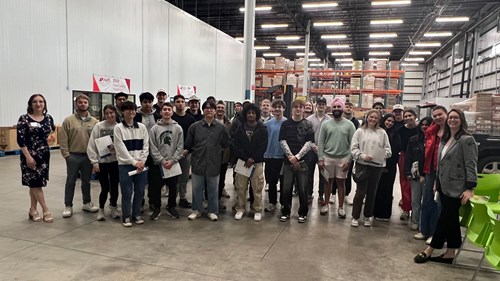
Broad College of Business Supply Chain Engagement with Food Banks: Raising Awareness about Food Distribution
Understanding systems that distribute essential resources can be a key step in promoting fair access to them. In the Broad College of Business, supply chain management students have the chance to explore an especially impactful application of their program: food bank operations and food security advocacy.
Read this story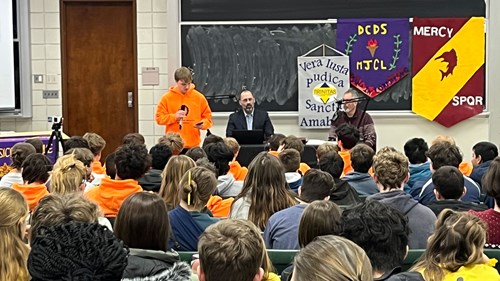
College of Arts and Letters Connection over Classics: MSU Classical Society Volunteers at the Michigan Junior Classical League Convention
Volunteering can connect students and communities around shared interests, including ancient history and mythology. On January 31, 2026, students in the MSU Classical Society facilitated the Michigan Junior Classical League’s (MJCL) convention on MSU’s campus for the first time in 20 years and came away with meaningful relationships and lessons in leadership.
Read this story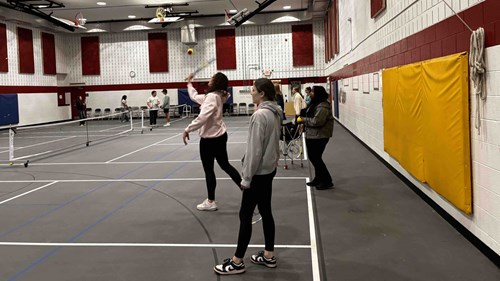
College of Communication Arts and Sciences Preparing Students for Civic-Minded Careers: Public Relations Projects at a Lansing Nonprofit
Community-engaged learning often provides opportunities for students to practice for their future careers in ways that support nonprofit missions. In spring 2026, public relations students in PR 425, a course about public relations strategy and ethics, had the chance to put theory into practice as consultants for Lansing nonprofit Todd Martin Youth Leadership (TMYL).
Read this story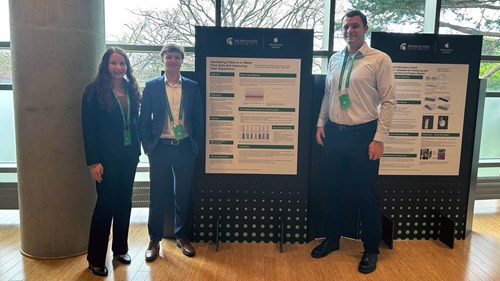
College of Engineering Solving Problems and Maintaining Relationships: Partner Projects in the Data Science Capstone
Data is everywhere in the digital age, and understanding it can help organizations and professionals further their missions. As they near completion of their degree, data science students complete capstone projects that synthesize their skills, learning to navigate community partnerships and applying their knowledge toward the common good in the process.
Read this story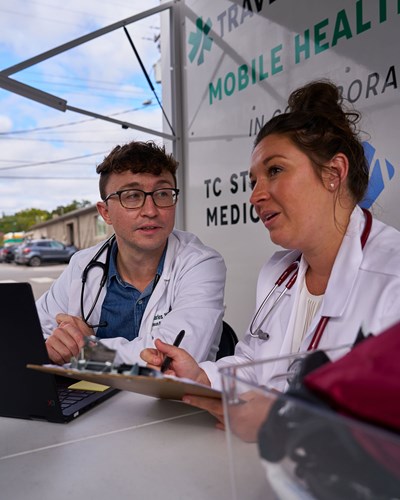
College of Human Medicine Rural Community Health Program: Training Health-Care Providers for All Environments
Medical students often train in urban hospitals, but for those planning to treat rural patients, understanding of these communities’ dynamics and potential barriers to care is a necessity. The Rural Community Health Program (R-CHP) in the College of Human Medicine trains the next generation of these physicians by immersing students in the locations they will serve in Michigan’s Lower Peninsula.
Read this story
College of Veterinary Medicine Practicing Client Communication: Veterinary Nursing at the MSU Science Festival
Veterinary health isn’t only about treating animals; the humans that love them need connection with care providers as well. At the annual MSU Science Festival in April 2026, veterinary nursing students practiced their client education skills by answering questions from kids and families about pet health and presenting their work as nurses in training.
Read this story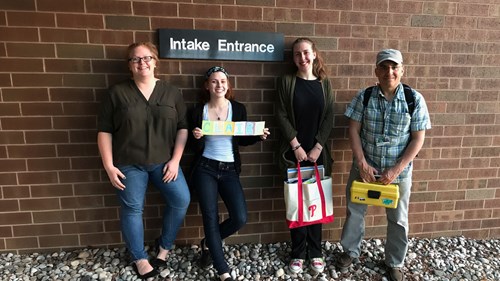
School of Residential Community-Engaged Arts and Humanities The Prison Arts Project: Building Empathy and Self-Expression Between Students and Incarcerated Participants
For incarcerated people, art can be a powerful outlet to freely express their true selves separately from their past actions. The Prison Arts Project brings workshops in visual arts, poetry, and music to youth detention centers and adult correctional facilities to share creative experiences and dialogue between MSU students and those living on the inside.
Read this story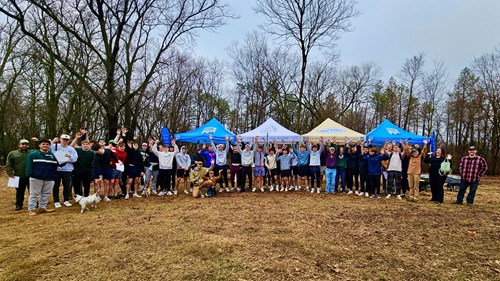
Student Affairs Fraternity and Sorority Service and Philanthropy: Student Mobilization for Social Change
Between national initiatives and on-campus outreach, community engagement is built into fraternities and sororities at Michigan State University. In 2025–2026, over 4,800 students organized each semester to give back to Greater Lansing through philanthropy and volunteerism.
Read this story
University Health and Wellbeing The Survivor Advocacy and Crisis Intervention Team: Volunteers Listen, Support, and Advocate
A listening ear is great to have in any volunteer setting; when serving survivors of sexual and relationship violence, it is essential. The Survivor Advocacy and Crisis Intervention (SACI) team at the MSU Center for Survivors provides volunteer support and advocacy services for community members processing a traumatic interpersonal incident.
Read this story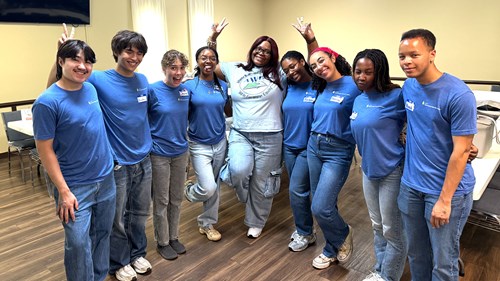
University Outreach and Engagement The Graduate Certification in Community Engagement: Promoting Professional and Scholarly Partnerships
Community-engaged learning at Michigan State University isn’t exclusive to undergraduates—graduate students also arrive on campus excited to make a difference. The graduate certification in community engagement offers grad students a meaningful addition to their degree that prepares them for any form their future work with communities may take.
Read this story