Residential College in the Arts and Humanities Creative Communication Across Cultures: How RCAH Students Connected with Lansing School District Newcomers
By Catherine Anger
Artistic expression has the power to transcend language barriers. This year, students in the Residential College in the Arts and Humanities (RCAH) had the chance to connect with young people through co-creation of narrative artwork at the Lansing School District’s recently opened Newcomer Center.
Estrella Torrez, Ph.D., a professor in RCAH, has worked with Lansing School District in various capacities supporting Indigenous and Latinx youth for 15 years. In July 2024, the district prepared to start new programs in partnership with the Lansing-based Immigrant & Refugee Resource Collaborative (IRRC).
Familiar with Torrez’s work developing arts-based projects as a method for communication, Deputy Superintendent Sergio Keck connected her with Nicole Namy, director of special populations for the district, and Sahar Mahmood, director of the soon-to-open Lansing Newcomer Center. Torrez credits these partnerships with the success of developing arts programming for a range of Lansing School District newcomers.
“I hadn’t had the opportunity to work directly with newcomers outside of the Latinx community,” says Torrez. “When you work in the community for a long enough time, you end up creating this nice constellation of folks who know one another. I was really fortunate to be brought into that fold.”
The Lansing Newcomer Center opened in October 2024 to familiarize children new to the United States with the English language and the public school system. Setting it apart from existing programs for immigrant and refugee students, this center focuses on equipping newcomers with the vocabulary and English proficiency needed to advocate for themselves in a classroom setting.
“My students that I work with jointly in RCAH and in Chicano and Latino studies may not have access to or knowledge of the languages spoken in the class,” says Torrez about her conversations with the IRRC staff regarding bringing her students in to support arts programs. “One of the things that I’ve learned in working across different communities is that, regardless of language, people are able to use art to express and communicate themselves.”
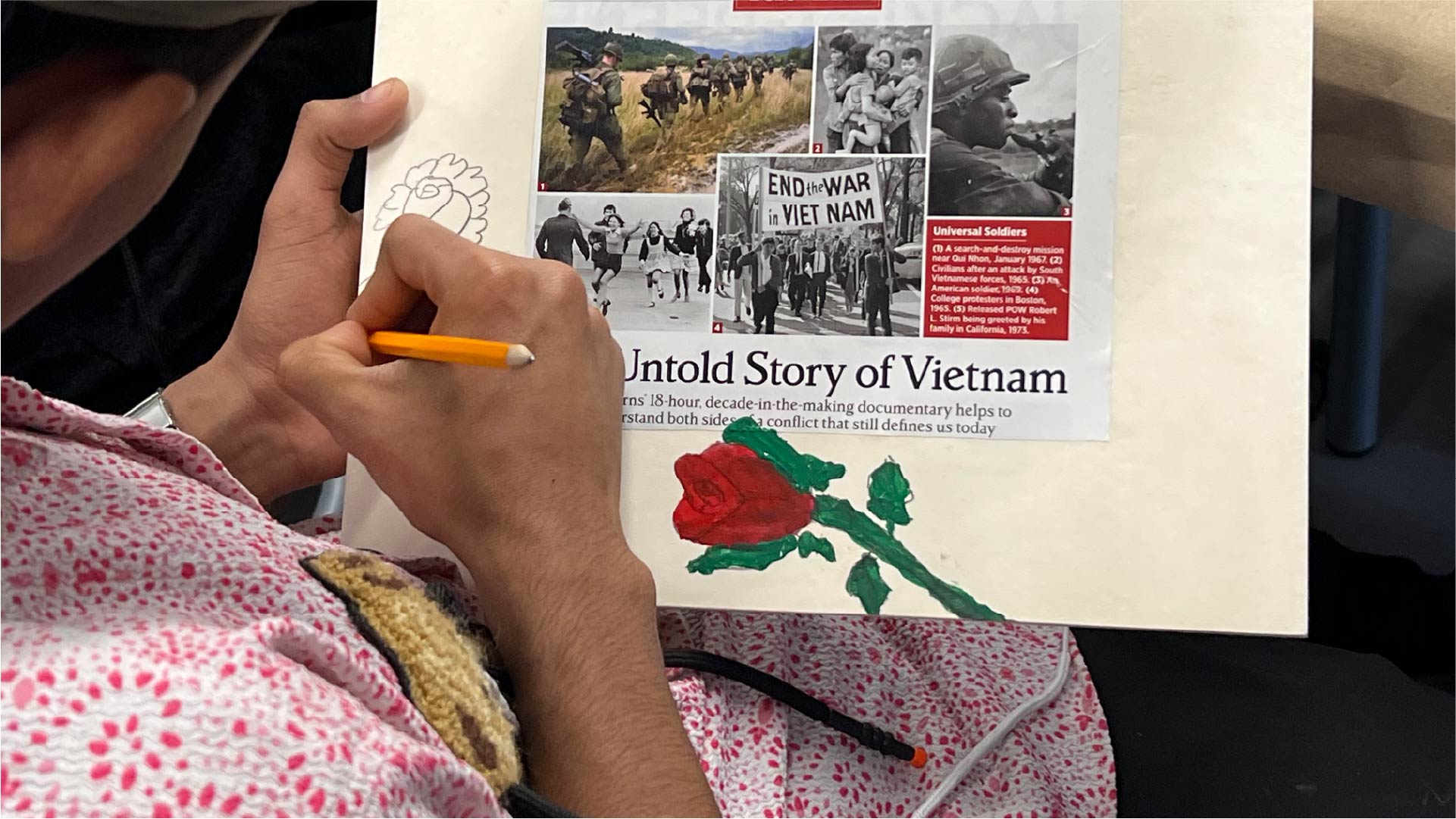
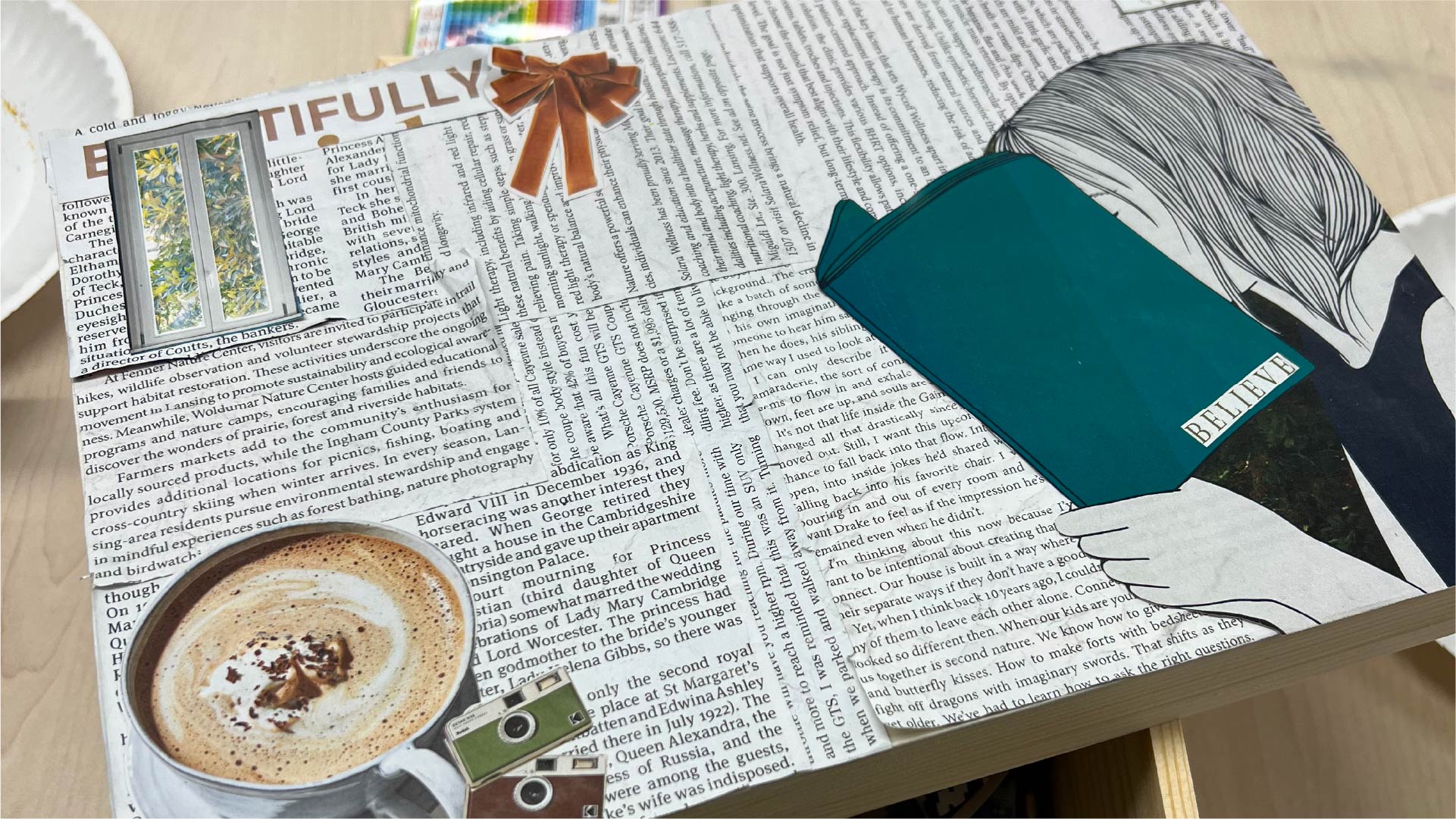
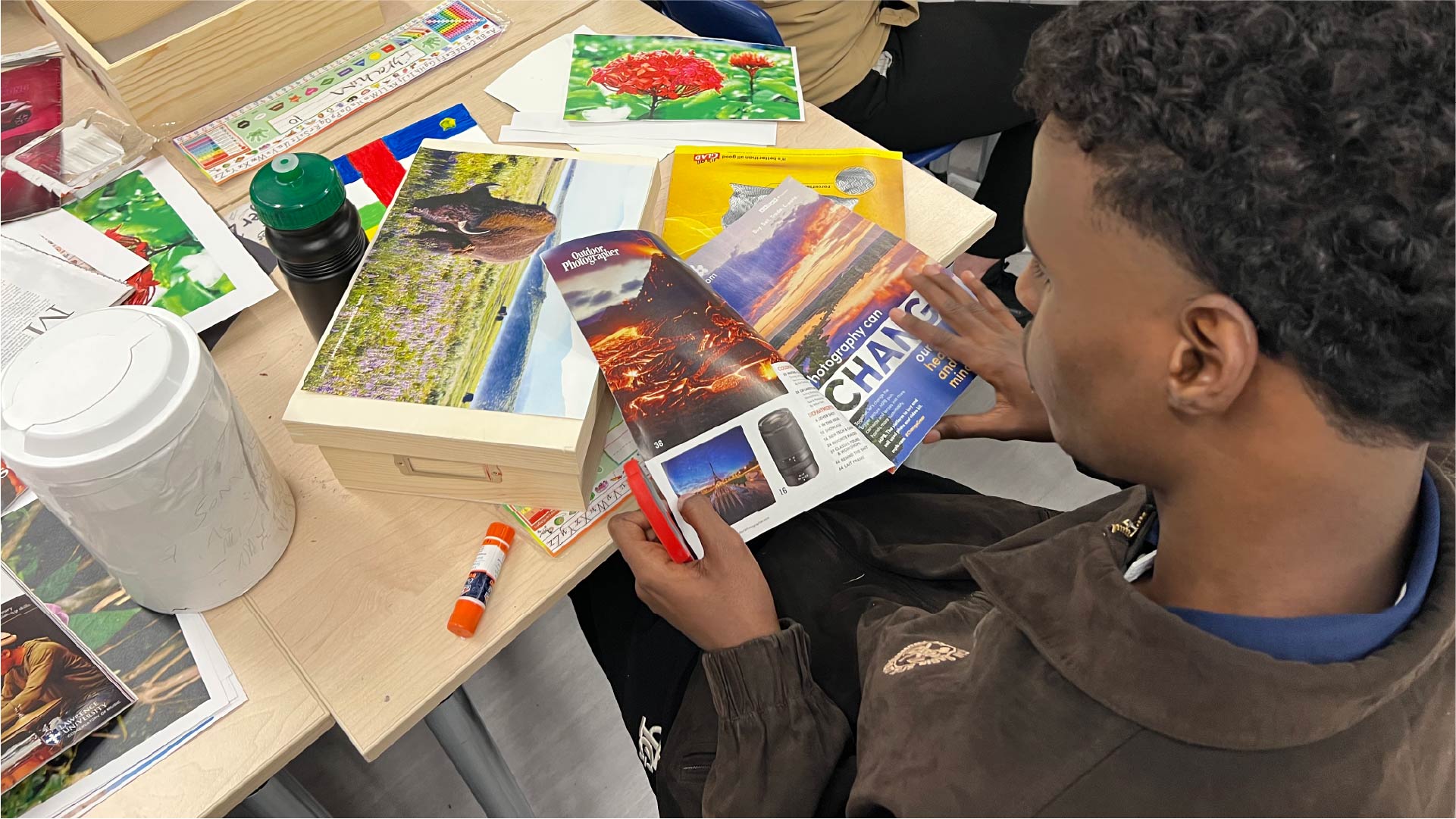
In eight meetings throughout the spring semester, Torrez’s classes joined Newcomer Center students in self-expression through various media such as drawing, painting, collage, photography, and sculpture. These meetings created a valuable space for RCAH students to learn from the stories of newcomer students as well as for newcomer students to build confidence in communication.
“These moments of cultural exchange were filled with joy and mutual curiosity,” says Karissa Zarate, a spring 2025 graduate who joined Torrez’s course through Chicano and Latino studies. Zarate’s class project centered on documenting and uplifting lived experiences through ethical storytelling practices, such as prioritizing listening over interpretation and emphasizing agency in sharing stories. “Volunteering isn’t just about helping,” she says. “It’s about building real connections and learning how to show up for others.”
“This is where we have a joint human experience,” says Torrez about the arts as a healing space. “When we’re able to show each other artworks that express a bit of who we are, we can use those moments to understand who we are collectively and individually.”