College of Osteopathic Medicine Macomb County Street Medicine: Dignity and Care for Patients Facing Substance Use Disorder
By Catherine Anger
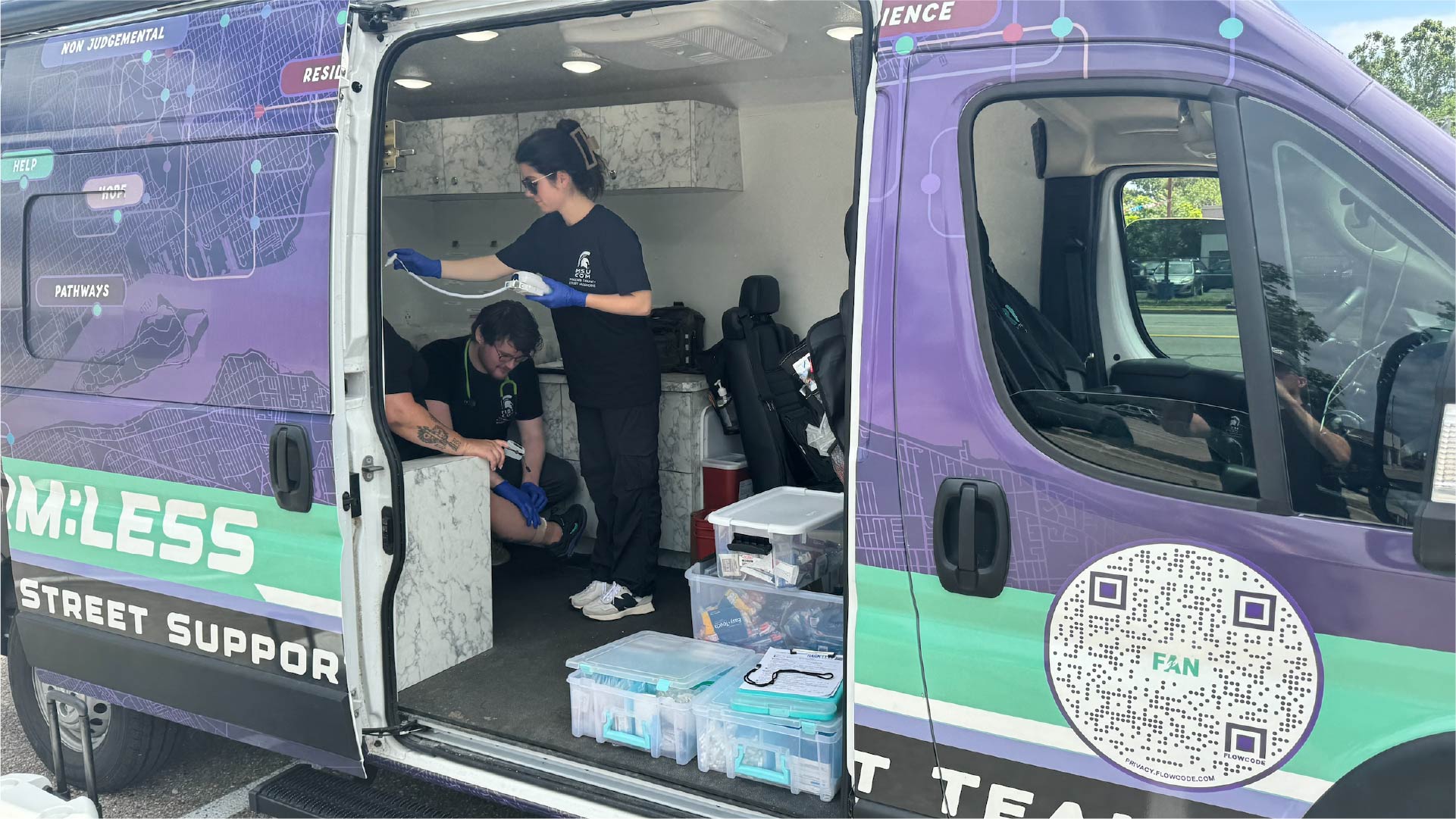
Seeking medical care can be difficult for community members with prior bad experiences with hospitals, especially those living with substance use disorder. Macomb County Street Medicine (MCSM) is a registered student organization providing wound care in easily accessed spaces to anyone who needs it.
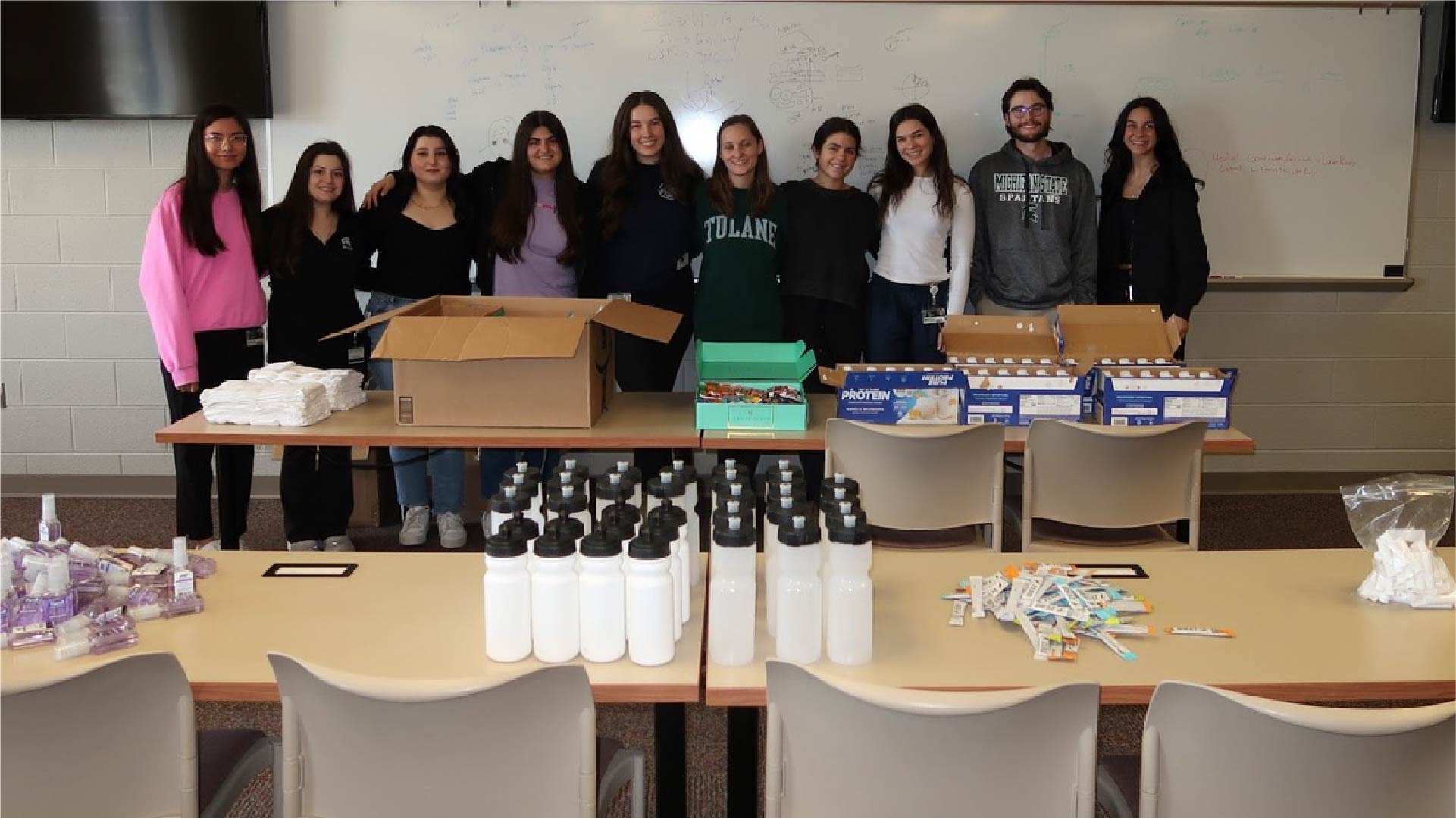
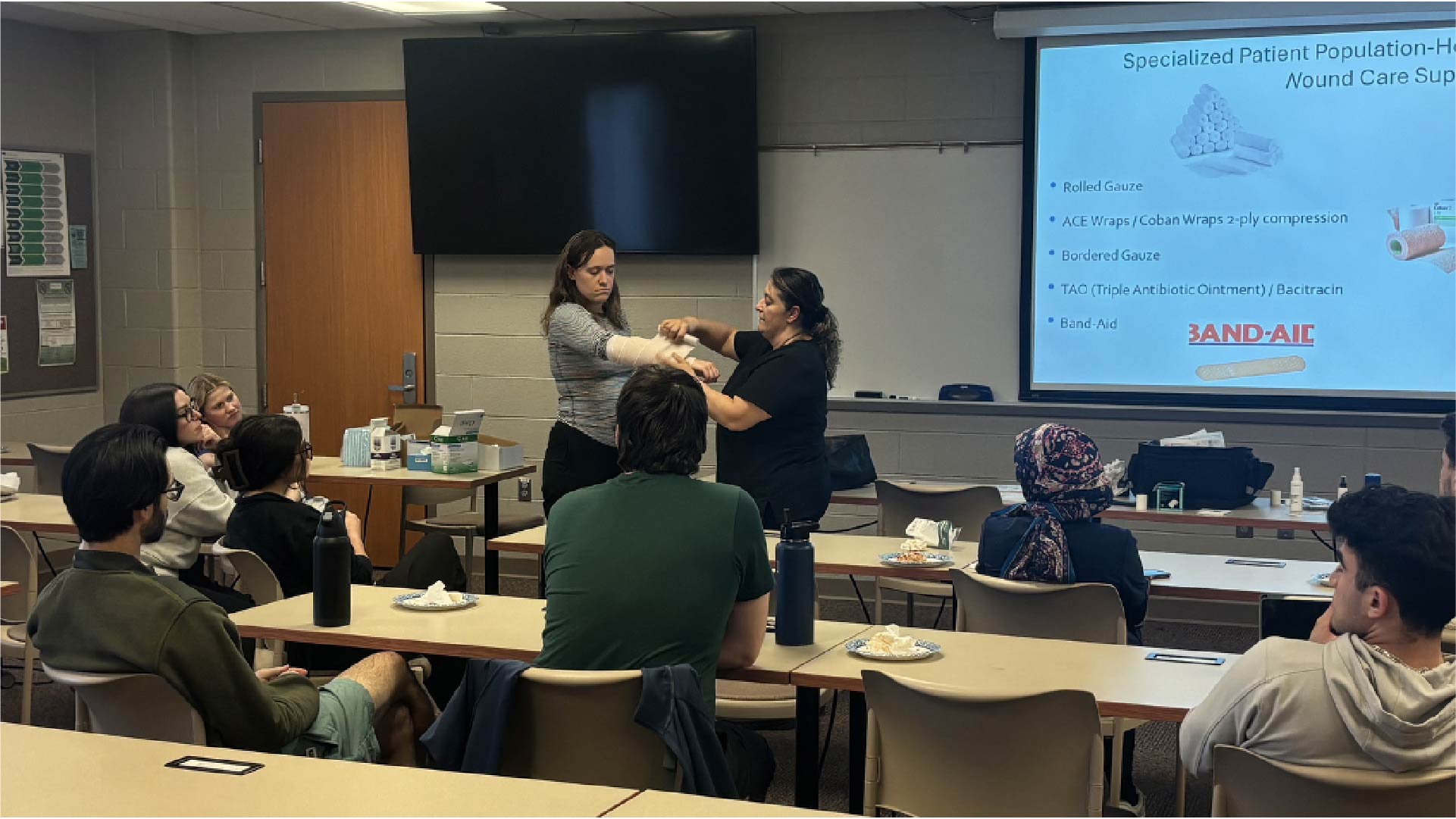
MCSM, an outreach program of MSU’s College of Osteopathic Medicine, partners with the nonprofit organization Face Addiction Now (FAN). Working with FAN’s harm reduction support team HARM:LESS, MCSM learns about public areas of Macomb County where unhoused people or people using substances gather. Students receive training before volunteering with MCSM and primarily provide wound care and antibiotics for soft tissue infections related to injection drug use. They also distribute sleeping bags and backpacks with basic wound care kits, hygiene kits, socks, and water bottles.
“Oftentimes, we’re the only health care [our patients] are receiving,” says MCSM Secretary Terrance Duncan. “Where before these individuals were at risk of going septic or suffering from a blood clot, we’re able to regain mobility, reduce pain, and promote healing.”
.
“Harm reduction” describes many strategies that combat the negative social and health effects of substance use. For HARM:LESS, which works side by side with MCSM medical students, this means providing supplies that lower the risk of infectious disease, injuries, and overdoses, such as clean needles, drug testing strips, and Narcan. HARM:LESS also promotes recovery options and connects community members with essential resources.
“It’s important for those who use drugs to know they have a community to go to when they need help,” says MCSM Research Coordinator Ali Rida. Rida shares that community members sometimes reuse needles up to 40 or 50 times, which can cause large vascular injuries and increase risk for illnesses. “If [drug use] is going to happen, the least we can offer is some dignity. Those injuries can tumbleweed into multiple issues in the future,” he says.
MCSM is one of several clinical outreach programs open to osteopathic medicine students. The focus on harm reduction that MCSM volunteers gain through their partnership complements their medical education by approaching care for people with substance use disorder with a holistic view that considers all parts of their lives that affect this condition.
“A big part of the osteopathic philosophy is that the mind, body, and soul are all one unit, and we go beyond that when we talk about humanity and treating others with respect, kindness, and dignity,” says Rida.
“This isn’t practice for when we have our first patients,” shares Duncan about his experience with MCSM. “These are our first patients. We are providing health care in the capacity we can for individuals who either have a distrust of or lack of access to the health care system at large.”
COM students interested in learning more and volunteering with MCSM can visit the organization's website for contact information.