College of Natural Science The Residential Initiative on the Study of the Environment: Direct Service in Environmental Sustainability
By Catherine Anger
For incoming students with a passion for sustainability, the Residential Initiative on the Study of the Environment (RISE) offers a community of like-minded Spartans dedicated to making a difference. RISE is a living-learning program that unites first-year students from many majors across campus around a common goal of caring for the environment through direct service.
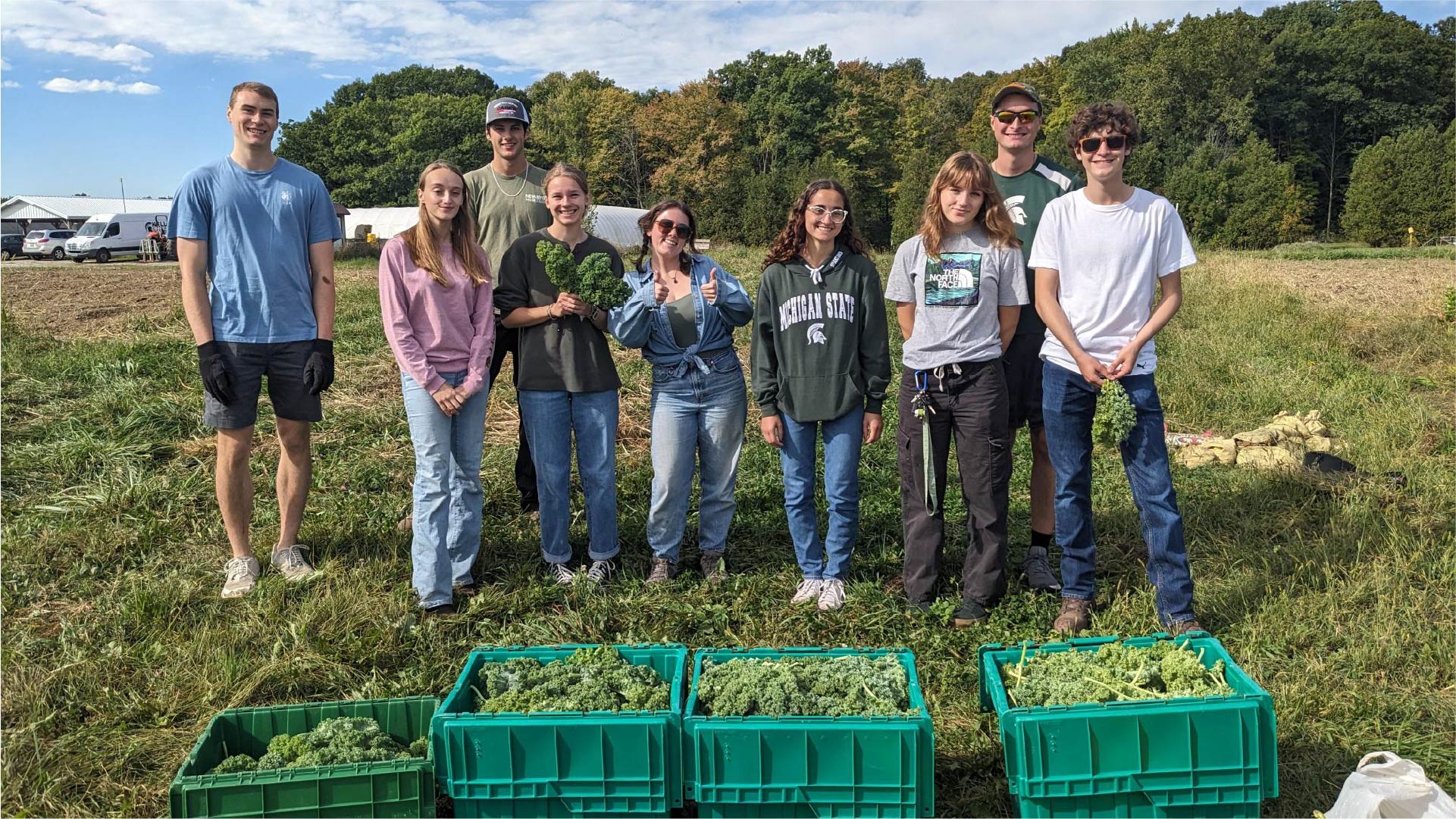
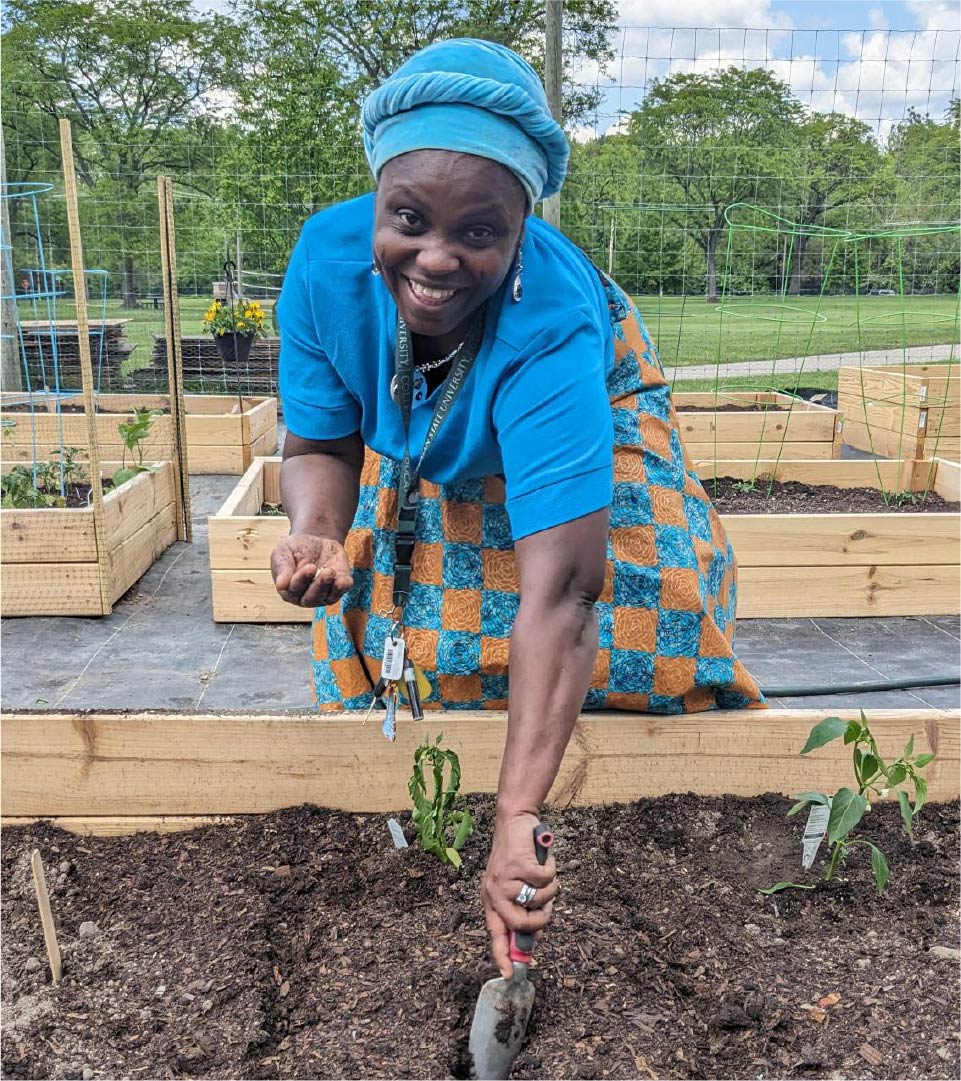
Students in RISE regularly have the chance to get to know each other by working together on a range of environmentally focused projects. Through volunteer hours on campus at the Bailey Greenhouse and Urban Farm and a new community garden at 1855 Place, developed with the Greater Lansing Food Bank Garden Project and Residential Education and Housing Services, students can apply what they’ve learned in their first-year RISE seminar about the environmental practices that go into growing food.

“We invest heavily into hands-on opportunities that take them from their screens, allow them to work with their hands and engage with each other,” says Jorhie Beadle, Ed.D., assistant director of RISE. In conversations during one of many social events hosted throughout the year, staff learned that students are spending about 8 hours per day on their phones. “Crafternoons” and coffee hours hosted by RISE staff accompany volunteer time as a way for students to connect in person.
RISE students also receive support in grant writing and developing proposals for environmental stewardship projects around campus. This year, through a grant from the Organic Valley Foundation and in collaboration with MSU Extension, RISE coordinated several projects around campus centered on Indigenous foodways and food sovereignty.
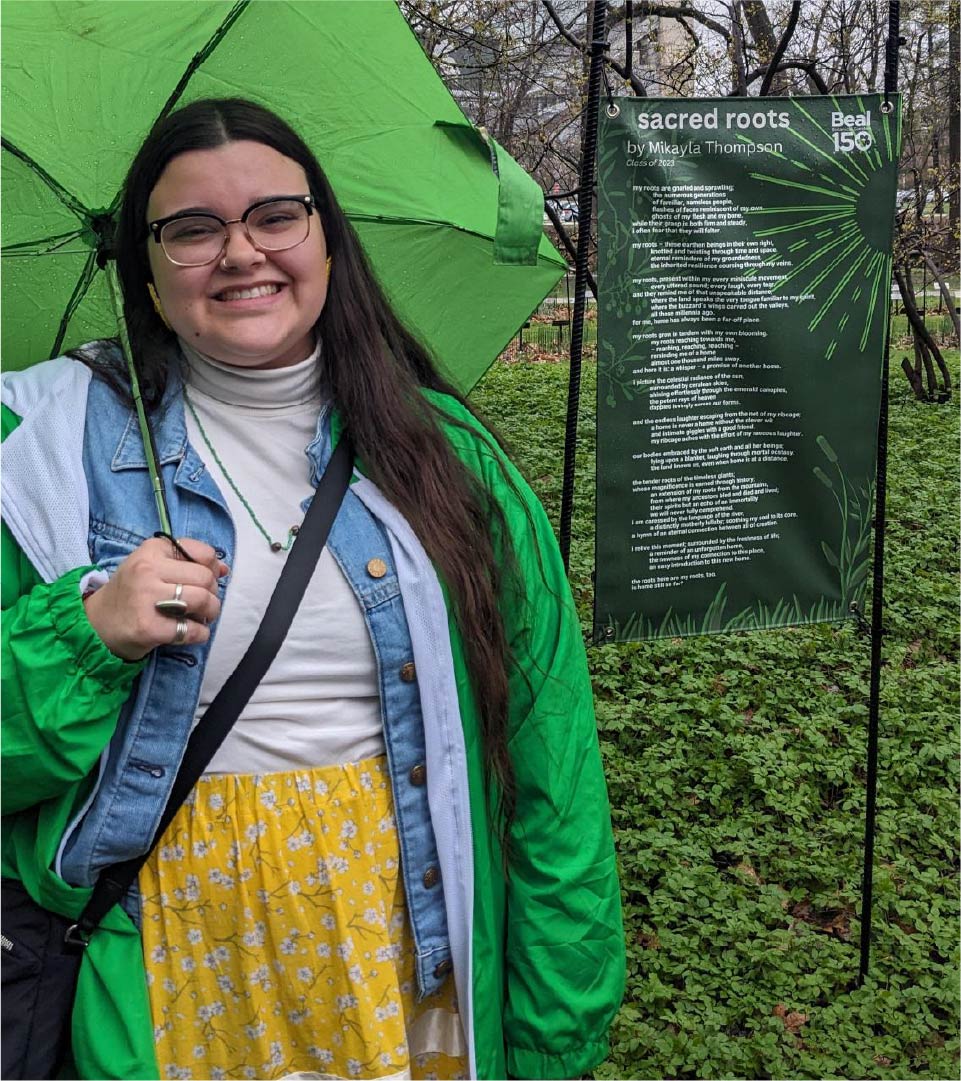
The 1855 Place Community Garden played a part in this initiative by providing space for students living in the apartments, many of whom are international graduate students, to grow foods from home. The grant also funded 2025 graduate Mikayla Thompson’s creation of a Four Sisters Garden in the Beal Botanical Garden and Three Sisters Garden at the Nokomis Cultural Heritage Center.
“It’s important to meet people where they’re at, so we moved that garden to Nokomis, where there was already an existing infrastructure,” says Beadle. The Three Sisters Garden became a partner project with Nokomis due to the need for a surrounding knowledgeable community to help the garden thrive. “It was a hard and real awakening that it takes a lot of time and it takes a lot of different spaces to do that work. We actually extended [the grant] beyond a year just to really do the due diligence of making sure that we're building those relationships.”
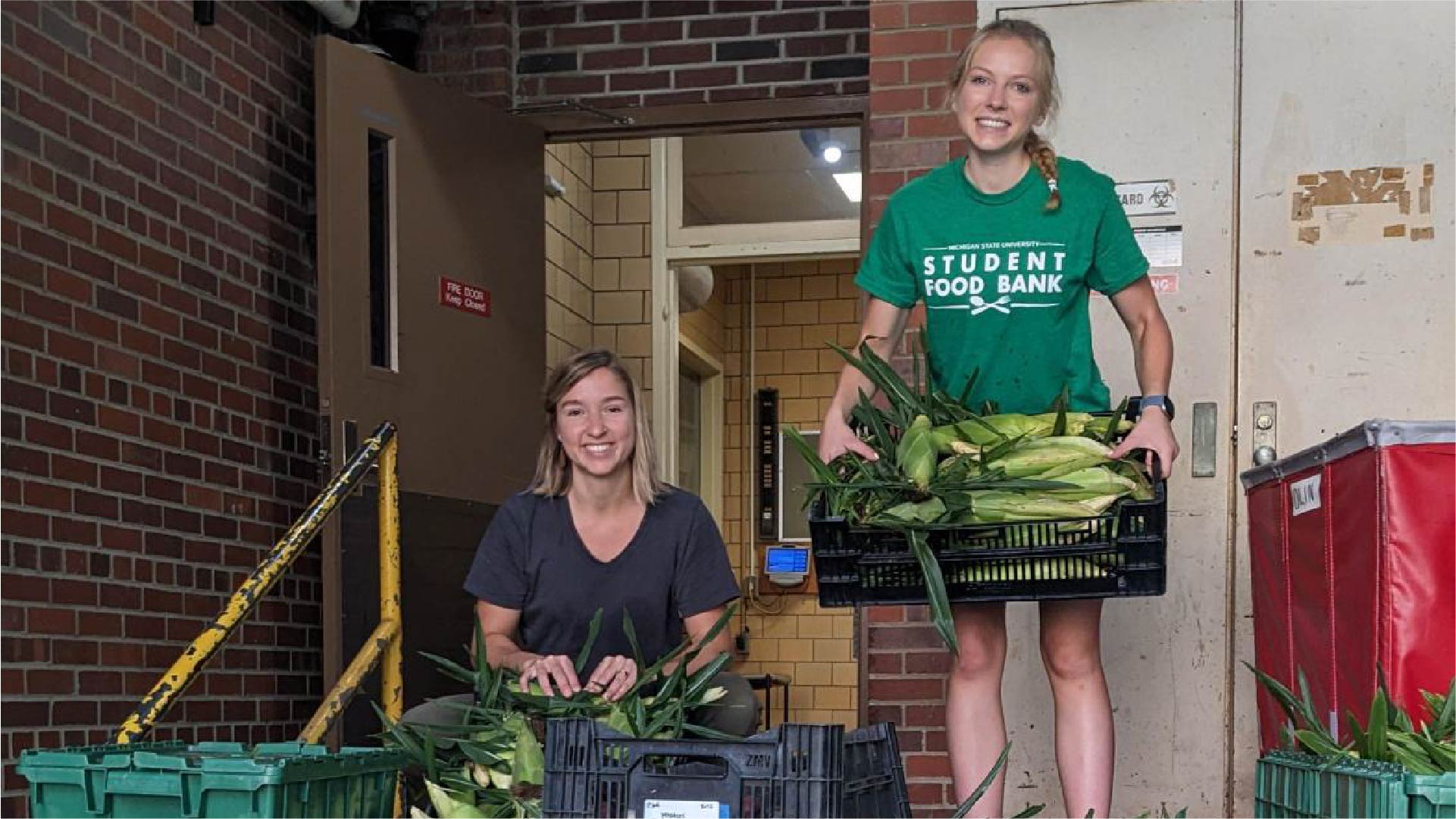
Through these gardening experiences, RISE often grows an excess of food, which students harvest for community members facing food insecurity. The MSU Student Food Bank and Student Parent Resource Center are key recipients of this produce. From these relationships, RISE students also connected with Spartan Street Medicine and are gathering data on ways they can provide food to unhoused community members while they receive support.
“These are students who have a deep ethic of care not only for the environment, but for people and for environmental justice and food justice,” says Beadle.
In the 2025-2026 academic year, RISE students and staff will continue to build from these projects. Through collaboration with MSU Extension and the Native American Institute, development of an on-campus indigenous foodways conference is in progress. RISE’s new partnership with Homeless Angels, developed from their relationship with Spartan Street Medicine, aims to add a community garden to their Lansing campus. According to Beadle, a key way RISE programs succeed in educating students on the direct engagement that plays a part in community sustainability is through resilience. “We engage in these multiple projects to embed into the culture of RISE these opportunities for students to see ways that you can build community resilience, because that equates to environmental resilience.”