College of Human Medicine Public Health in Ghana: Research and Service for Improved Health and Hygiene
By Catherine Anger
Every summer, students from the Charles Stewart Mott Department of Public Health, College of Human Medicine, contribute to community health research efforts during a study abroad experience in Ghana. With a focus on causes and effects of menstrual health disparities, the 2024 cohort applied their knowledge to the expressed needs of community members they met and gained global context for the many factors of public health.
Constance Currier, DrPH, an associate professor in the department, was invited by the African Studies Center 20 years ago to collaborate on the development of a study abroad program in Ghana based on her experience there with the Peace Corps. This would become Michigan State University’s first study abroad program in West Africa. Since summer 2024, through a new partnership with Dr. Sitsofe Gbogbo at the University of Health and Allied Sciences (UHAS) in Ghana, the program has focused on addressing menstrual hygiene needs of school-age girls in Hohoe, a community near UHAS in the Volta Region.
The program aims to build upon MSU students’ sense of social responsibility, starting with orientation on cultural humility prior to students’ departure to Ghana. Reflection is also a key aspect of both the cultural exchange and academic experiences for these students through journaling and discussion. Several students shared that, while they were connecting with people in Hohoe who experienced poverty, they learned a lot about how the community’s sense of care differed from what they would see in the United States.
“Students learn about working with vulnerable populations, and they come away with important insights into poverty in ways they typically wouldn’t understand,” says Currier. “There are a lot of preconceived notions that people who are in lower income countries are downtrodden or sad. The people [in Hohoe] are quite content, quite willing to share in ways we don’t see here, so students learn the value of working together with communities and taking their input and not going in and imposing their thoughts and values.”
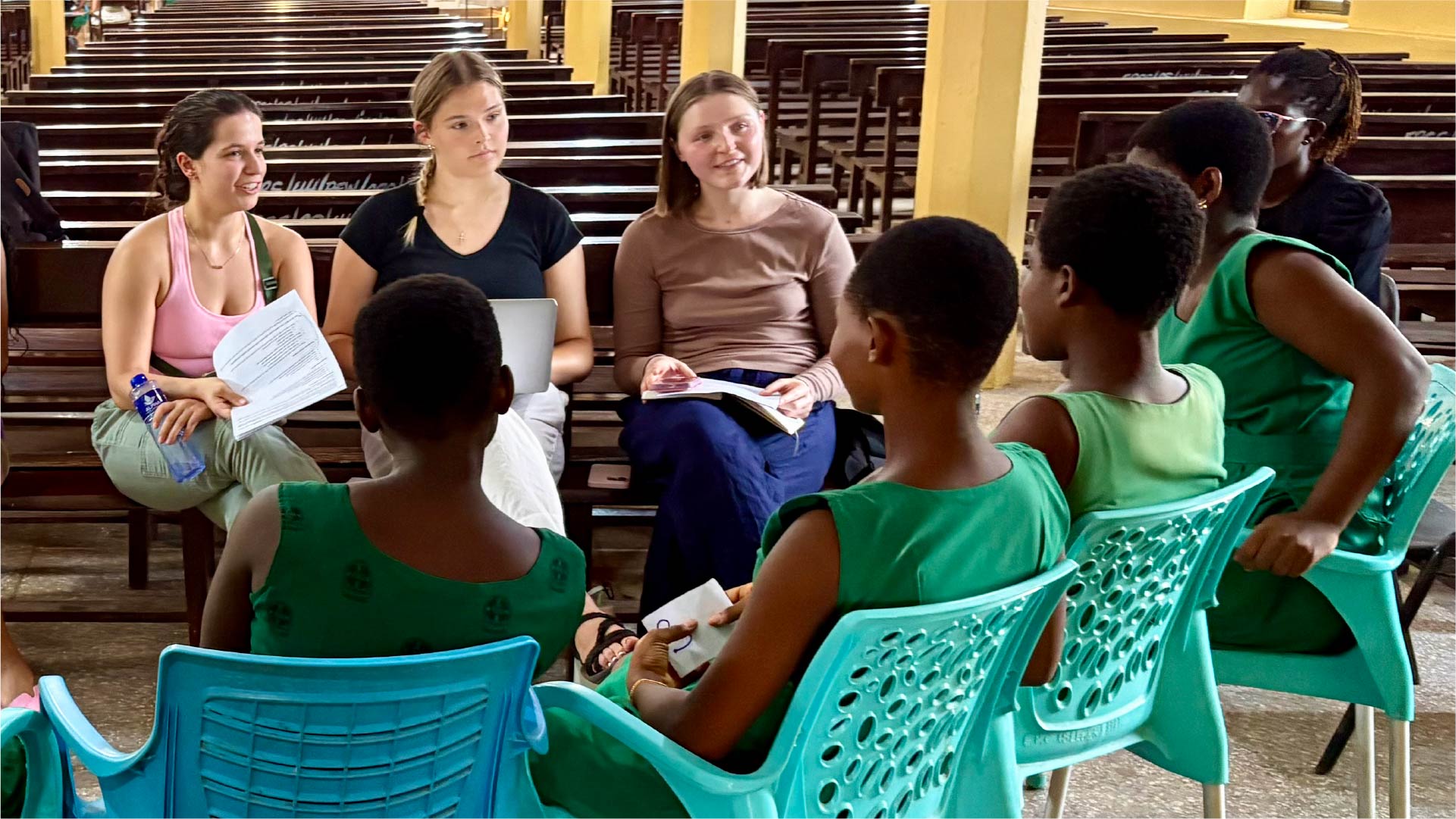
For 3 weeks in summer 2024, public health students collaborated with UHAS faculty on interviews with focus groups about menstrual health perceptions among community members in Hohoe and learned from lectures about the cultural context of their work. Students then synthesized their findings from interviews into presentations for the community and UHAS students and faculty.
“All of the girls we spoke with had stories that have stuck with me, explaining how they manage their periods and what resources they use,” says student Kathryn Horvath. “This conversation made me realize how important trust and communication are in health care, especially in areas like Ghana where health care access is limited, and these topics may feel unfamiliar to these girls.”
“We were welcomed so warmly by the community and there was a sense of openness and acceptance around a topic that is often considered taboo,” adds student Kathleen Riley. “The community embraced the chance to learn, share stories, and support each other. It shaped my understanding of what it means to create safe, inclusive environments for health education, and the power of effective community engagement and mobilization can be for health equity.”
One insight that emerged from these conversations was that girls in Hohoe without access to hygiene products are more likely to miss school while menstruating, demonstrating that menstrual health is a social equality concern as well as a physical health one. “You can imagine the cumulative effect of missed schooling on their achievement level in education,” says Darline El Reda, DrPH, the director of the Master of Public Health program at MSU. El Reda accompanies the study abroad cohorts to Ghana with Currier. “We’re also talking about socioeconomic outcomes because of the challenges economically on young girls who then become members of families responsible for children. With less education, it can be a spiral.”
Recommendations based on these findings included education to combat the stigma surrounding menstrual health issues; improved water, sanitation and hygiene (WASH) facilities; and access to affordable and sustainable menstrual products. (Sitsofe Gbogbo et al., 2025) This led the summer 2024 students to host a fundraiser through GoFundMe to build a well and changing rooms at the local school, and a separate grant has since funded the distribution of reusable menstrual cups at a church in Hohoe. The summer 2025 cohort had the opportunity to conduct post-intervention interviews following up on the work of the previous year’s students.
“We don’t have the solutions for all the potential challenges that folks face, but sitting side by side with schoolgirls and asking what they really need to make their menstrual experience a more positive one works toward many of these goals,” says El Reda.
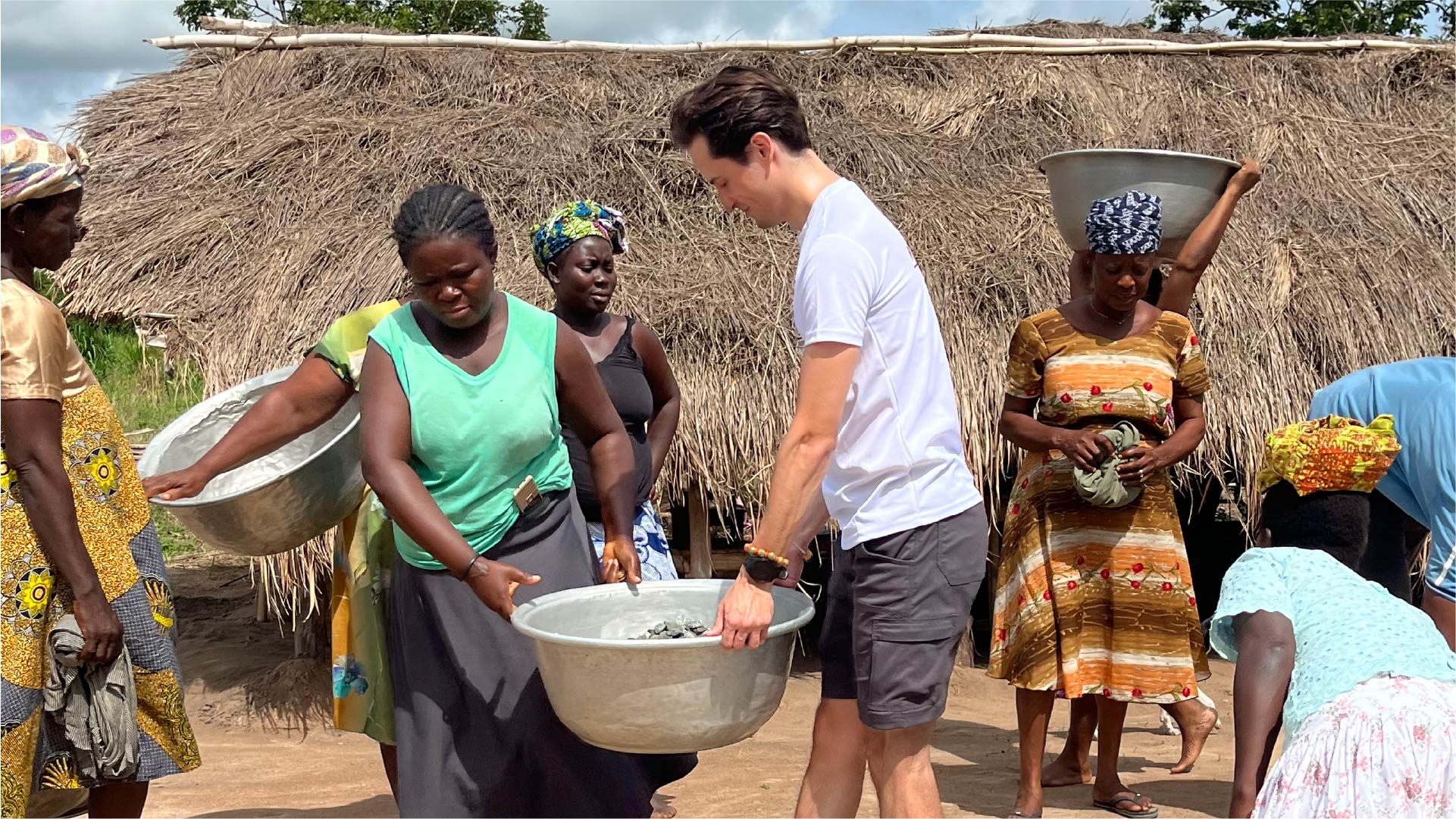
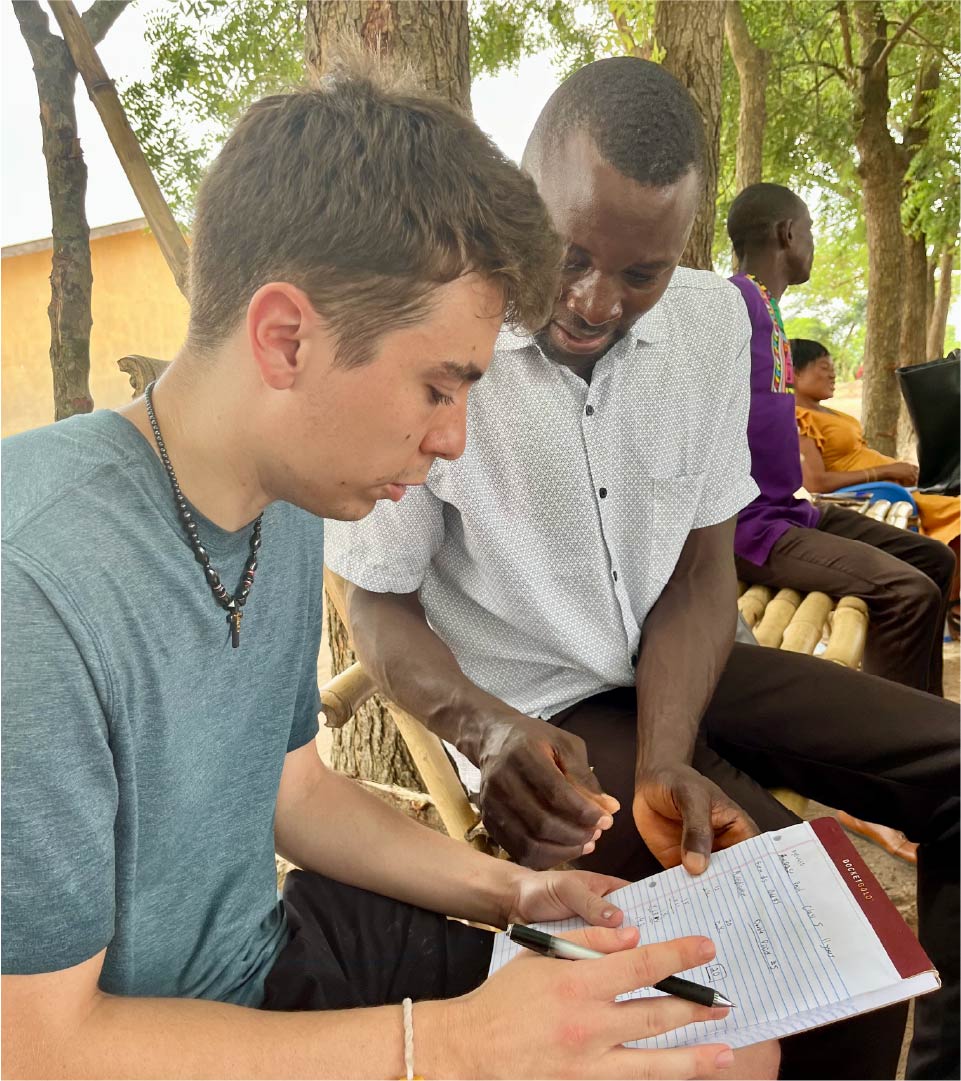
Students studying abroad in Ghana have the option to stay for an additional week and volunteer on a service project with the nonprofit organization Adanu. Currier serves on the board of the organization’s U.S.-based fundraising arm, Friends of Adanu. In summer 2023 and 2024, students supported Adanu’s work by refurbishing WASH facilities at a local school and had the chance to meet with the students and teachers there.
“We had meaningful conversations with teachers about health and education, which gave me a deeper appreciation for how these topics are approached in different communities,” shares student Andrew Davis. While at the school, MSU students also played volleyball with the students and worked with the teachers during lessons.
This experience’s global context for health and hygiene’s intersections with education, WASH facility access, and social perceptions of topics like menstruation strengthens public health students’ ability to learn from communities anywhere they serve. As Currier says, “Being able to jointly develop solutions with community members that you may have little in common with are skills that are directly in alignment with the Department of Public Health—just on a different continent.”