College of Communication Arts and Sciences Spartan Stuttering Laboratory: Uplifting Verbal Diversity
By Catherine Anger
Around 80 million people worldwide (about 1% of the world’s population) stutter, which can include many different types of involuntary speech disruptions. The Spartan Stuttering Laboratory advocates for the needs of people who stutter by providing inclusive support spaces and collaborating with national and international partner organizations to raise awareness.
Historically, stuttering has been viewed as a disorder to be overcome through speech therapy. For insurance companies to cover treatments, in many cases stuttering still has to be framed as a problem to overcome. People who stutter face challenges in career and educational advancement, risk for depression from social isolation and bullying, and even some mockery in the press and media. Among speech language pathologists, it is one of the least understood areas. The laboratory and its research are part of the push to reframe stuttering as a difference to be accommodated.
“As we begin to recognize stuttering as an example of neurodiversity, we can help people come to terms with and accept the fact that their brains are just different,” says J. Scott Yaruss, Ph.D., a professor of communicative sciences and disorders. Yaruss started the Spartan Stuttering Laboratory 9 years ago and has dedicated his career to research in stuttering and promotion of the idea of verbal diversity. “Society may not understand that difference, but we can work toward improving that and hopefully thereby reduce the adverse impacts that people experience,” he says.
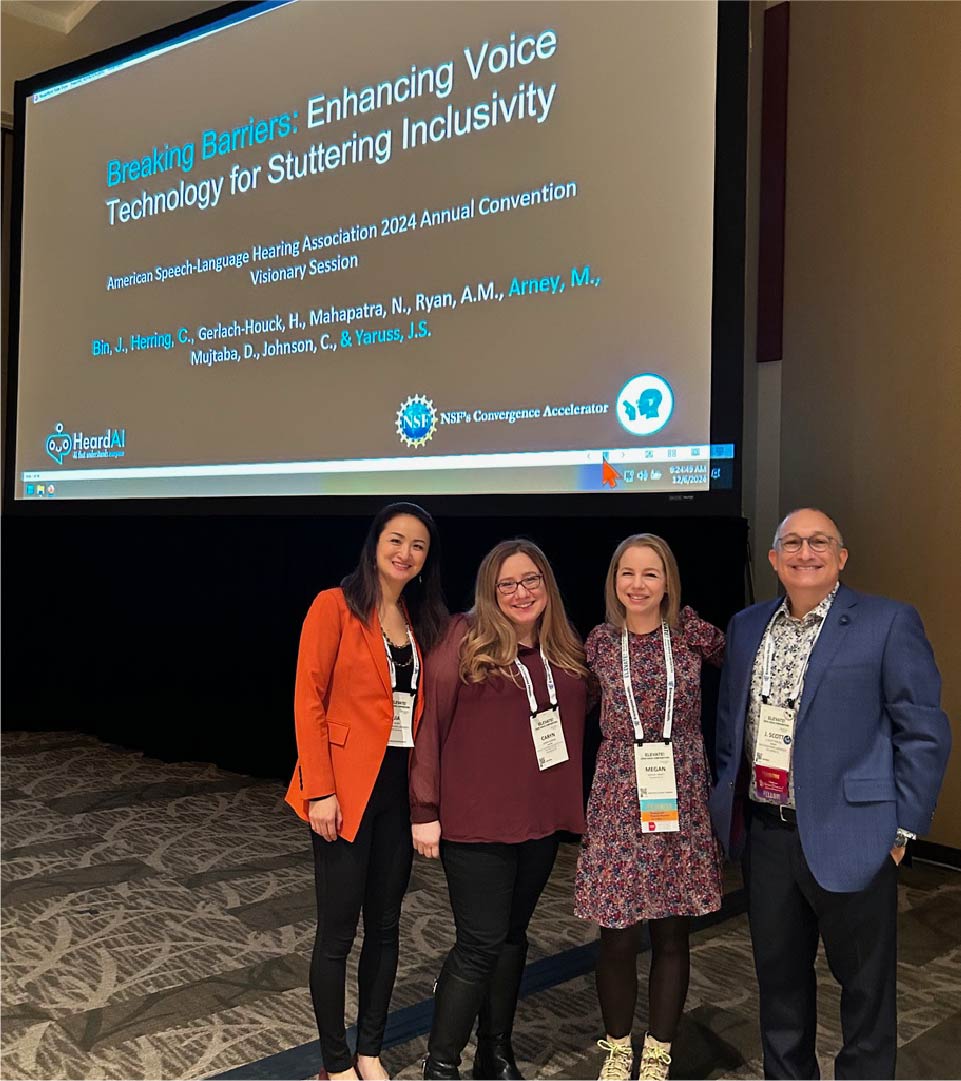
The Spartan Stuttering Laboratory primarily researches the lived experiences of people who stutter. Current studies include “Stuttering in the Real World,” an effort to gather the largest ever collection of speech samples from people communicating in everyday situations, and a National Science Foundation-funded project to help automatic speech recognition systems understand stuttered speech. The laboratory’s researchers, a team of undergraduate, master’s, and doctoral students supervised by Yaruss, also volunteer with events and programs designed to raise awareness and provide a community space centered on these experiences. Events have included movie nights for documentaries on stuttering and a talk by John Hendrickson, an author who stutters, about his memoir.
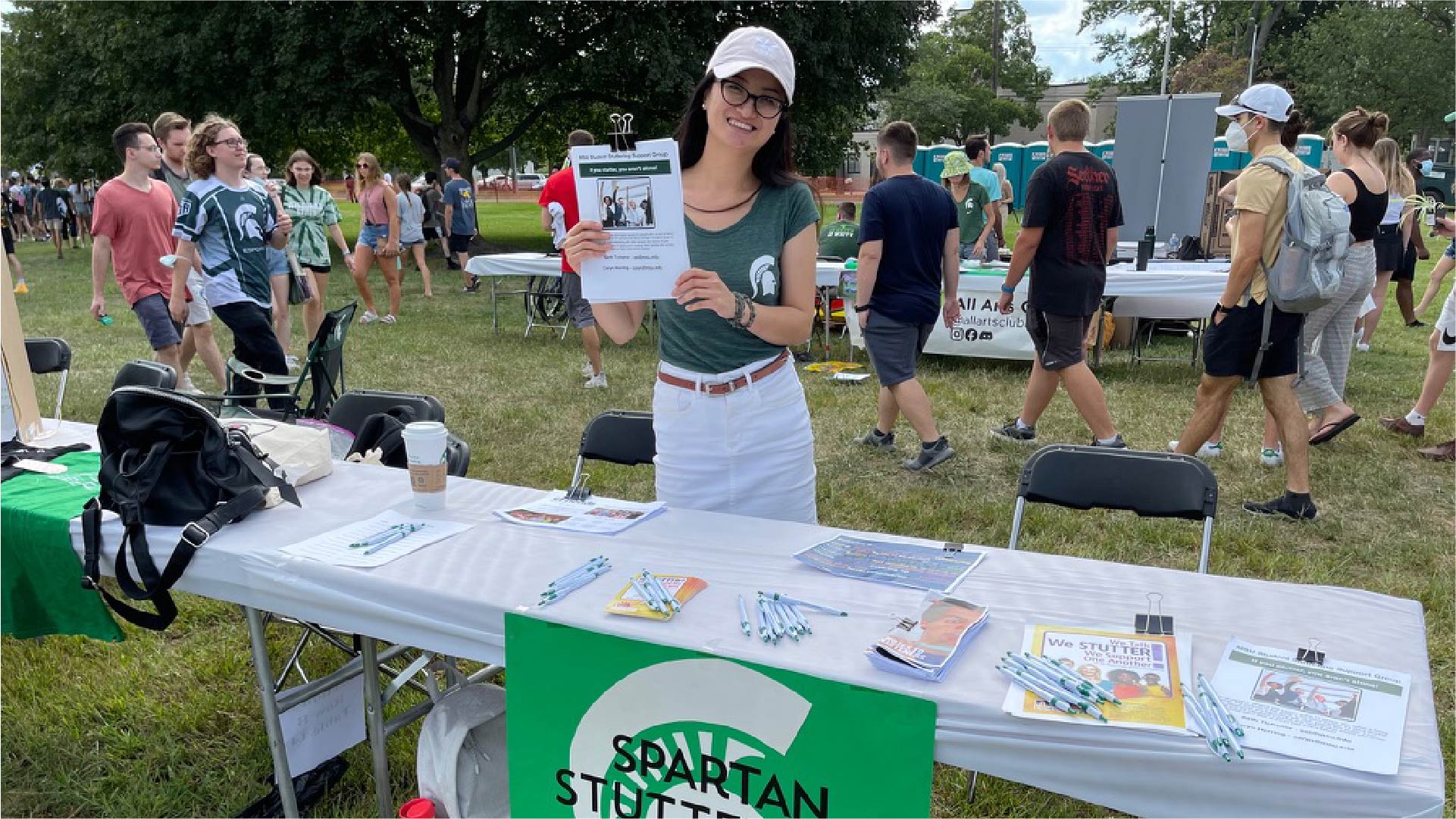
One program from the laboratory open to members of the MSU campus community is the Spartan Stuttering Support Group. Jia Bin, a doctoral student working in the laboratory and herself a person who stutters, leads this group as well as the East Lansing chapter of the National Stuttering Association. Through monthly meetings, the support group builds understanding around experiences with stuttering, breaking social stigma and celebrating the verbal diversity of its members.
“I think true inclusion means that people who stutter don’t have to hide their stuttering in the first place,” says Bin. “People who stutter should feel safe and empowered to disclose our identities, and in that way, I think the other end will need to know, ‘What are our needs?’”
Bin was born and raised in China, where the field of speech language pathology is relatively young. Prior to coming to the United States, Bin worked to organize the Chinese stuttering community through participation in stuttering podcasts and hosting online support groups. Her personal experiences in facing discrimination as a person who stutters inform her work in advocacy and community building on campus.
“Growing up, being a person who stutters in China, I didn’t know there was a community there,” says Bin. “Most Chinese people who stutter I’ve met, they do not have the words to capture their experiences. Even the ones who managed to get some level of help, you have to change who you are to fit the social norm. There’s a huge gap. That’s why I feel the work I’m doing is very meaningful.”
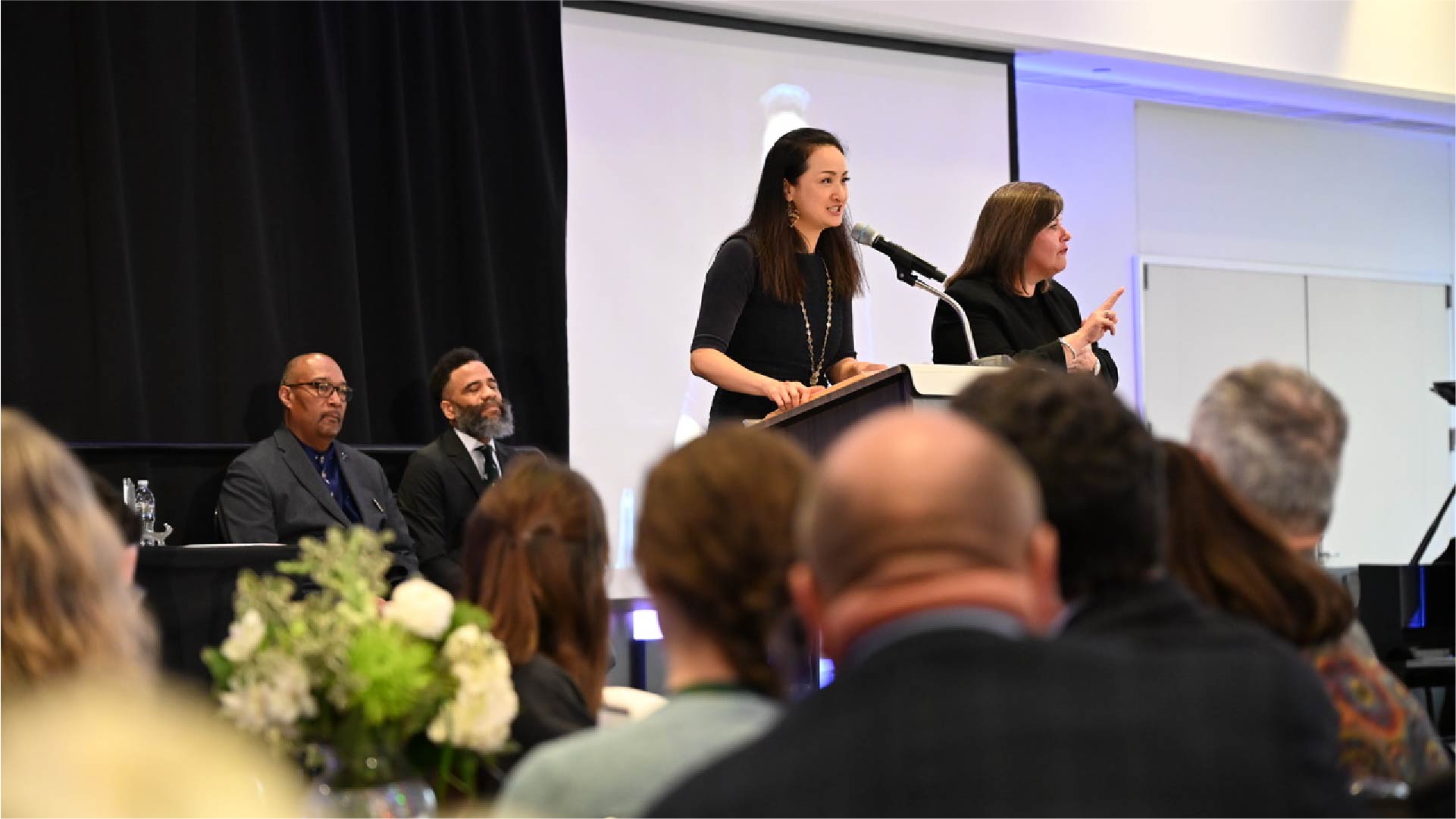
In spring 2025, Bin received University Outreach and Engagement’s Graduate Student Award for Community Engagement Scholarship for her work in bringing stuttering support research into practice. She reflects on the ceremony for the award, particularly the opportunity to speak publicly about her work, as intimidating and important.
“I managed to get my message across, I openly stuttered, and I feel that’s very meaningful to remind [others] that people who stutter exist,” says Bin. “When I finished my speech, I walked down from the stage, and this lady whispered to me, ‘I stutter too, I’ve never told someone.’ Those are the moments I feel like, it’s not about the award, it’s about visibility.”
For the Spartan Stuttering Laboratory and students like Bin who commit to this work, interpersonal connections are key to continuing to break down social stigma. “There’s a lot that needs to be done, and we’re learning more and more about the impact,” says Yaruss. “We’re directly open to say, ‘This is a stutter-safe place.’ This is a place where everybody gets to be welcomed and included and accepted, regardless of the nature of their difference.”