College of Arts and Letters Community Engagement in the Department of Theatre: Building Skills in Social Innovation

By Catherine Anger
Like their peers across Michigan State University, students in the Department of Theatre learn about the variety of ways they can apply their technical skills beyond graduation. Through community engagement experiences in different courses, theatre faculty aim to build this understanding in a way that inspires commitment to social innovation.
Dionne O’Dell is a professor specializing in children’s theatre. For over 10 years, O’Dell has partnered with OpenSpot Theatre, an organization that coordinates theater workshops for neurodiverse children in the community. Through her practicum course, students develop an interactive, multisensory show on campus for children and families connected with the organization. At multiple points in the semester, students preview and test aspects of the show to create as fun and accessible of an experience for these children as possible.
“There aren’t a lot of theaters, theatre companies, educational institutions that are creating work from the ground up for audiences that are neurodiverse,” says O’Dell. “It may not be a complete solution, but we’re addressing the topic of inequality as far as making theatre accessible to all populations.”
Preparing a performance to accommodate neurodiverse audiences can take several forms, O’Dell shares. In this course, students also prepare complementary activities in the lobby in case a child in the audience is overstimulated and needs a break from the show but would still like to participate. During one performance, a child wandered onstage, which prompted the actors to improvise a way to include the child in the performance.
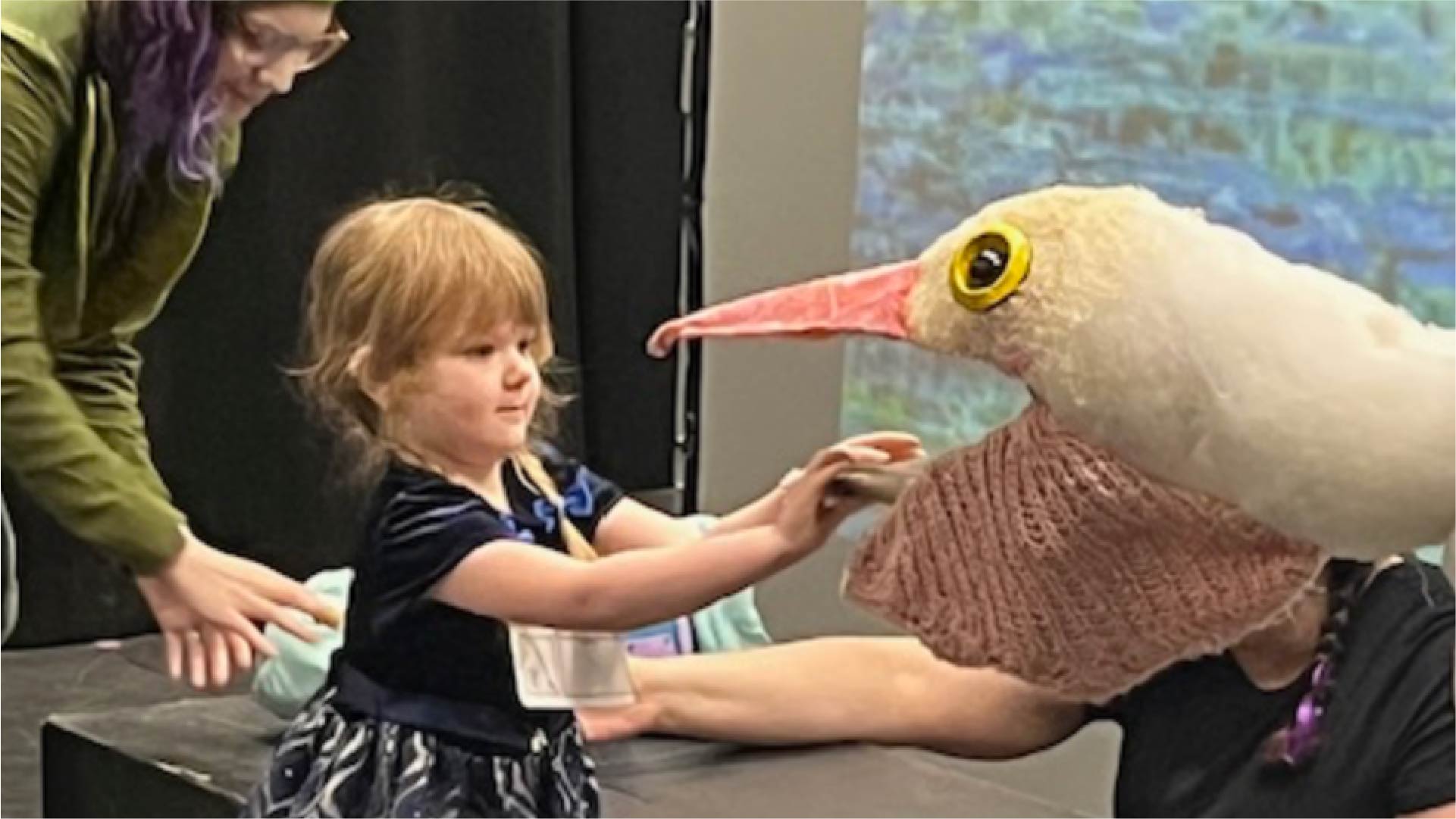
“We have partners in psychology and in education come in and give trainings,” says O’Dell. A key piece of advice that she received in developing the course comes from Tim Webb, founder of Oily Cart Theatre in London: “You’re the expert in children’s theatre. You don’t need to be the expert in special education as long as you’re partnering with people and asking questions.”
O’Dell’s course is one example of how community-minded projects are woven into the student experience in the Department of Theatre. As early as their sophomore seminar, students are tasked with a project where they theoretically plan a fundraising or community-building event and are required to research local organizations. In completing this project, the goal is to learn how to apply organizational and performance skills outside of a performance space.
“They start thinking, ‘putting on this event is just like putting on a play,’” says Kirk Domer, a professor of scene design and director of the Arts, Cultural Management & Museum Studies program. “By their senior year, it’s connected as to why they should do good.”
Theatre students complete their degree with a senior seminar course, such as the one taught by Domer in fall 2024. Through this seminar, students build their brands as theatre professionals and compile portfolios. Students also learn to take their art to the public through an outreach and engagement project based on a chosen community partner’s mission and needs.
Some of Domer’s students partnered with theatre organizations like OpenSpot and the Sense-ability Theatre Ensemble. Others applied their skills to unique projects, like one student who narrated audiobooks for the Braille and Talking Book Library. Another student, in collaboration with the MSU Student Organic Farm, applied set construction skills and experience with sustainable materials to renovate a room into a food bank for theatre students facing food insecurity.
By broadening ideas on how they can apply their education in theatre, students are trained to apply creative and entrepreneurial thinking in the arts to create projects that promote social good. According to Domer, “It’s okay to be a good actor. That’s not enough. The idea here is to be a good human, to be a good designer, and to connect with the community.”