Broad Art Museum The Broad Art Museum K-12 Engagement Team: Hosting Spaces for Discussion and Creation of Art
By Catherine Anger
Art serves as a window to the world and a form of personal expression, but disparities in K-12 arts budgets mean not all children can experience the same activities. Michigan State University students working with the Broad Art Museum’s K-12 Engagement Team provide a space for classes from local schools to connect with art on and off MSU’s campus.
Since 2019, the K-12 Engagement Team has facilitated educational arts experiences for K-12 students with financial support from the Park West Foundation. The team is open to applicants from all majors, though MSU students in education and the arts make up the majority. Through a community-engaged work experience, team members learn to apply knowledge of artwork and artistic creativity to the expressed curricular needs of visiting classrooms. Beyond these direct applications, joining the team is an opportunity to build soft skills like public speaking and project organization, participate in dialogue with younger students, and learn more about how museums work as institutions that promote these conversations.
“Some come into the job thinking, ‘I’m going to be presenting information’ and really quickly learn that’s not how we operate,” says Meghan Collins, museum educator for K-12 and family programs at the Broad. “We learn the information, and we have things to say, but we’re guiding discussions and helping people interact with the world in a different way.”
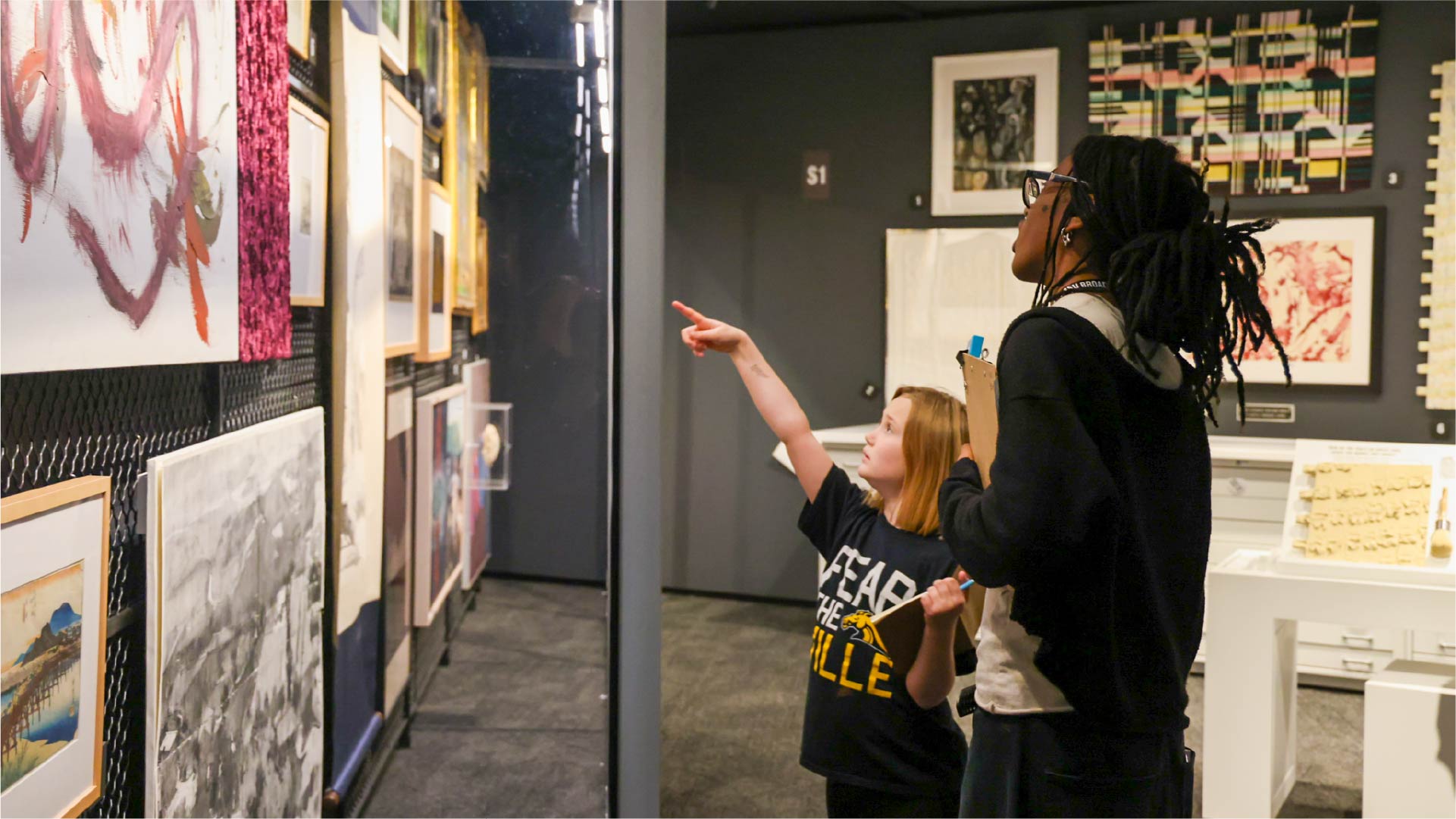
The team’s programming, which is free for schools, is split into two sessions over the course of a week. For classes at a participating school, the week starts with a field trip to the Broad. Ahead of time, the team plans which stops to make around the museum based on a topic of interest expressed by the teachers. This has included works featuring insects and animals, tapestries showing scenes of farms in Peru, photos of people living in African cities, and more.
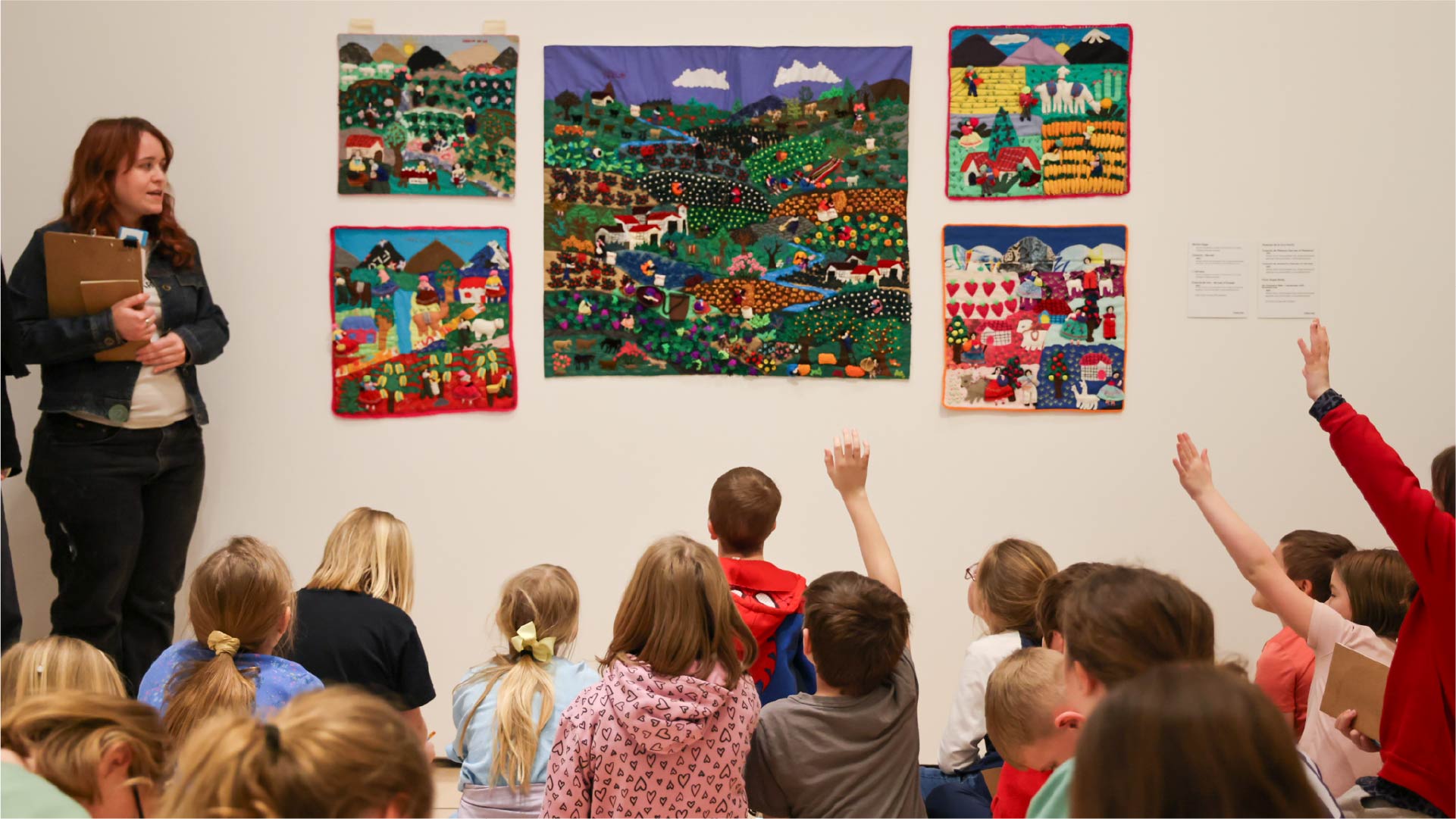
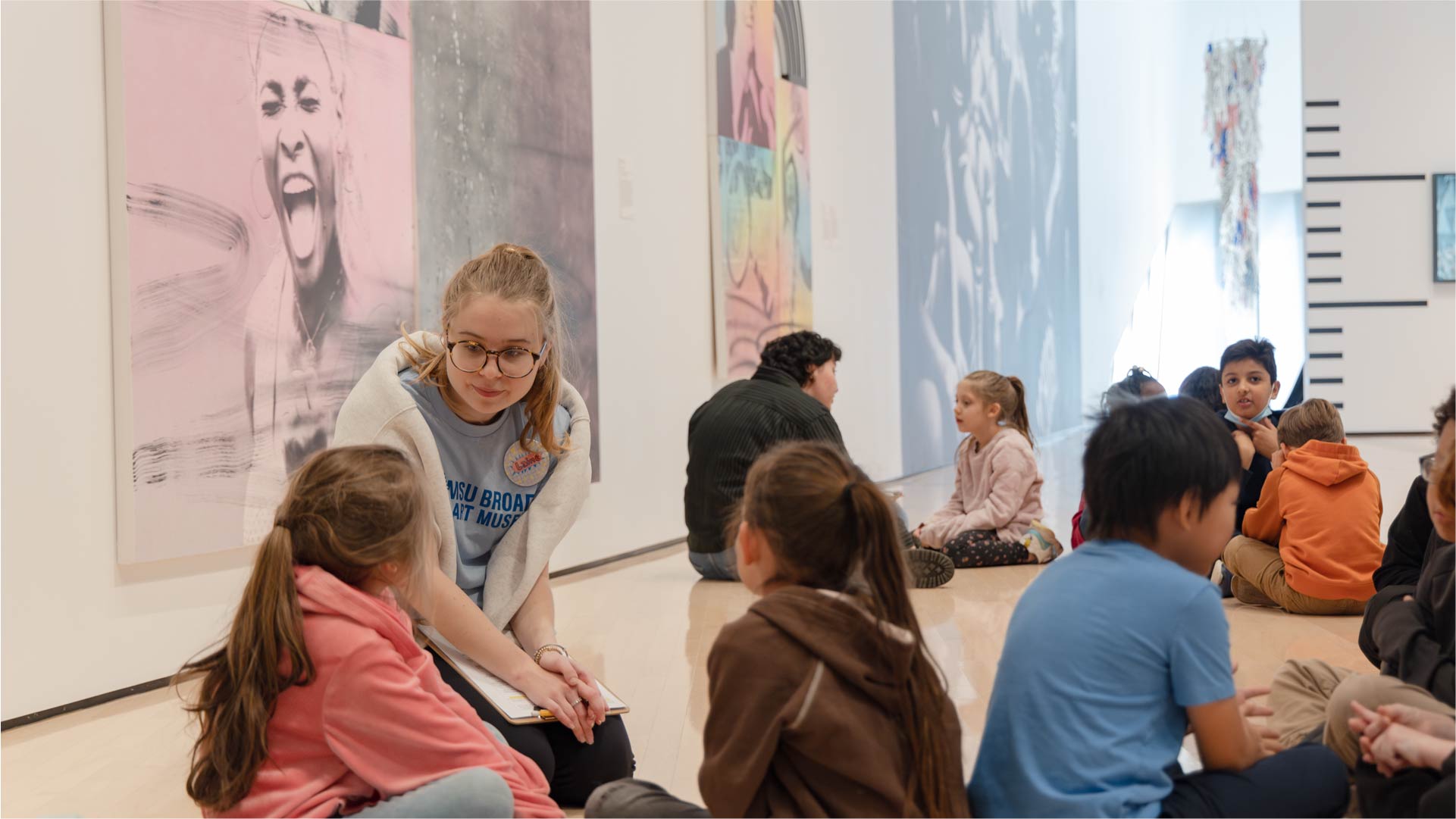
While guiding tours, the team opens discussions about the pieces they see using See/Think/Wonder, a frame borrowed from Project Zero at Harvard. Students are asked to share what features they see in the work; think about what it looks like to them; and wonder what inspired the piece or what the artist intended it to be. For students who would prefer not to share aloud, sketchbooks are provided so they can note observations that made an impact on them.
“We want you to think, we’re not just telling you what to think,” Collins says about how the team approaches discussion during tours. “A lot of their school days are information and right answers, so we’re trying to also show there’s so much more to learning than information.”
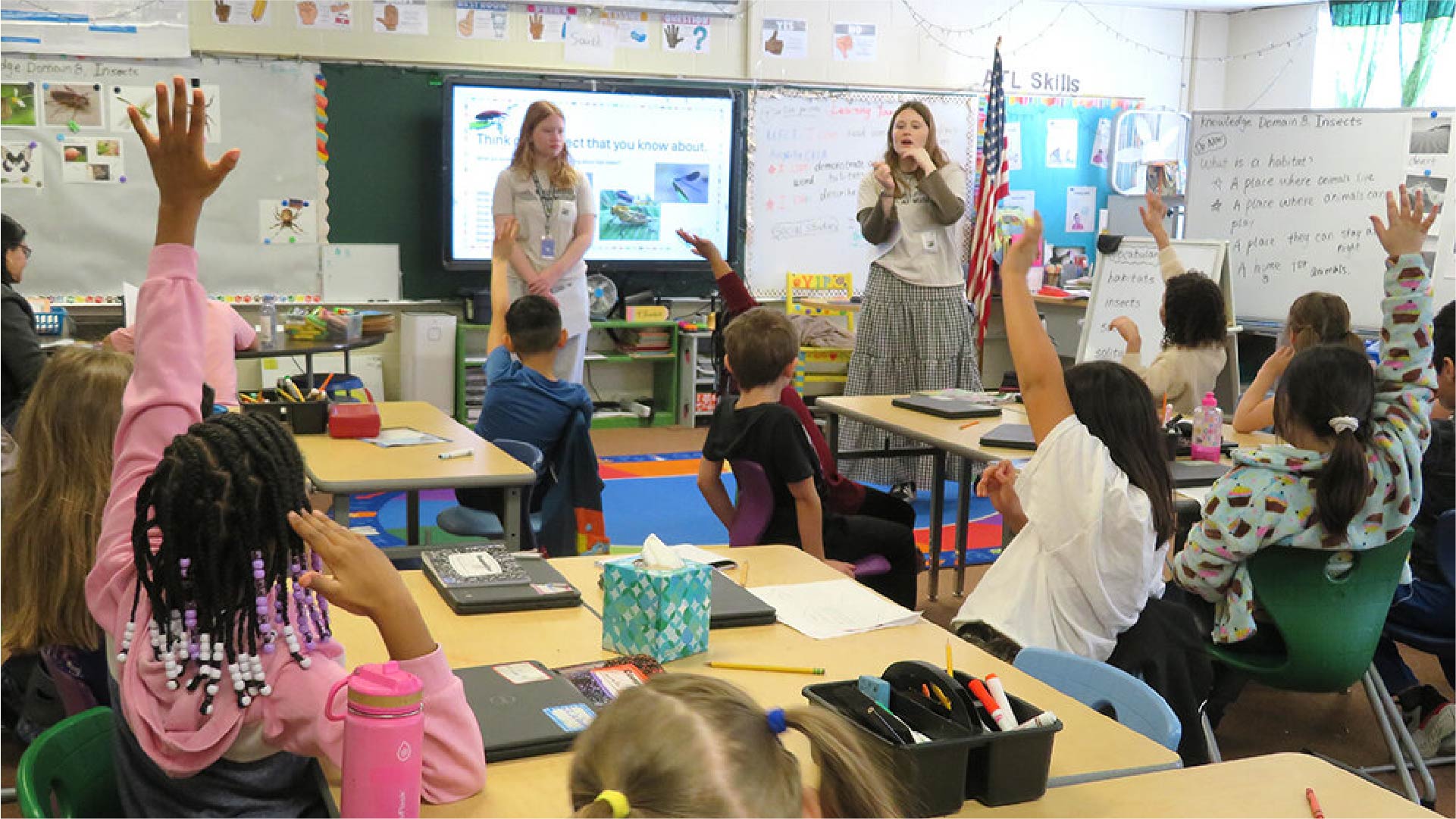
After the field trips, the K-12 Engagement Team ends the week by going out to the school and splitting up to visit each class they met. Team members share photos from the classes’ visits to the Broad before introducing projects the students will participate in. Even in districts with greater access to art materials, the team can introduce students to new media, such as sculptures or using wood panels for painting. Meanwhile, without having to worry about keeping the tour going, team members can sit with students as they work on their art projects and continue their conversations.
“I really like that we visit each other in each other’s spaces,” says Collins. “The tour is child-led in a way, but at school, it’s really child-led. We’re giving them materials, they’re in their comfortable space, and they’re making art.”
Some school districts with budgets for the arts participate for the value of seeing the museum’s collection in person and observing details up close. Meanwhile, for schools and teachers with a need for exposure to the arts, tours and workshops provided by the K-12 Engagement Team can meet that need and build relationships between MSU and students in the program.
“[The students] get to make something, which is valuable on its own,” says Collins. “We’re asking them to express their own ideas, which I think is one of the powerful things about art education.”