Community Engagement Scholars Program
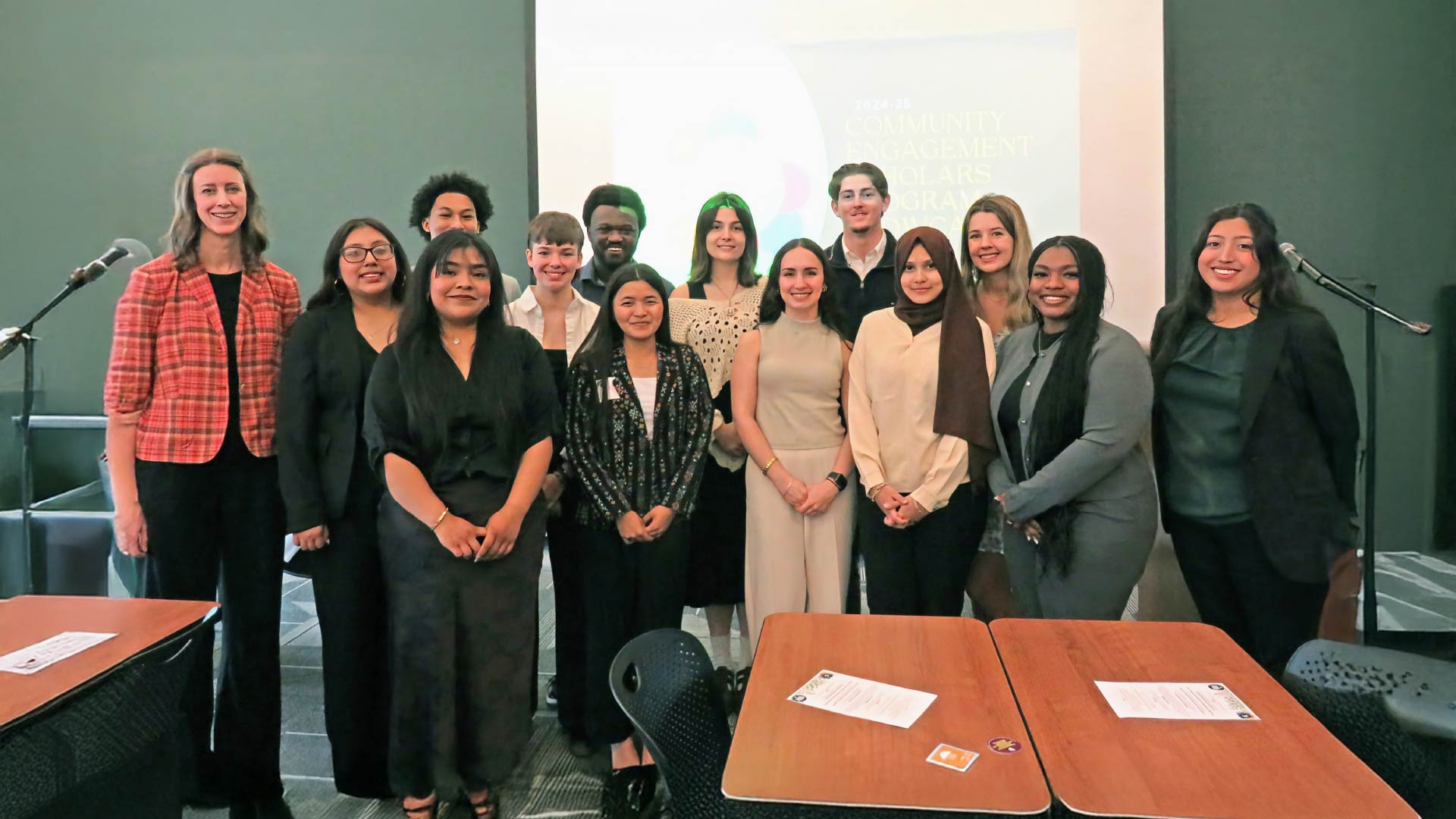
The Community Engagement Scholars Program (CESP) at Michigan State University is a yearlong, cohort-based initiative co-led by the Center for Community Engaged Learning and the Office of the President. Since 2016, the CESP has supported over 100 undergraduate students, 24 community partner organizations, and 10 graduate coordinators, preparing student leaders to engage with their communities thoughtfully and ethically.
The CESP provides undergraduates with opportunities to engage in sustained, reciprocal partnerships with Michigan-based community organizations. During the 2024–2025 academic year, 12 student scholars contributed to projects that addressed a range of social issues—from food access and refugee support to youth leadership, mental health, and arts-based education.
This year’s CESP community partner organizations were Allen Neighborhood Center, Capital Area District Libraries, Eastside Community Action Center, Meta Peace Teams, Michigan Women’s Commission, Michigan College Access Network, Michigan Institute for Contemporary Arts, Refugee Development Center, South West Action Group, and Todd Martin Youth Leadership. Each scholar was matched with a partner and committed approximately 15 hours per week to their work, including time spent on-site at their partner organization as well as participation in bimonthly cohort meetings. These meetings, facilitated by Program Director Stephanie Brewer and Graduate Coordinator Vivian Morales, focused on reflection, relationship-building, professional development, and deepening students’ understanding of community engagement.
Impact was evident in every placement. As Eastside Community Action Center staff noted, “[Our scholar] contributed to several impactful projects that significantly supported our organization’s outreach and program-development goals.” The scholar’s work ranged from crafting a social-media strategy and producing ready-to-publish posts to curating a pantry-staple community cookbook, coordinating a Community Cookout & Resource Fair, and supplying eviction-trend statistics to bolster a grant proposal. Similar stories emerged across the cohort: Scholars designed youth-leadership curricula, built data dashboards for library services, and organized peace-building trainings, collectively logging more than 5,000 engagement hours.
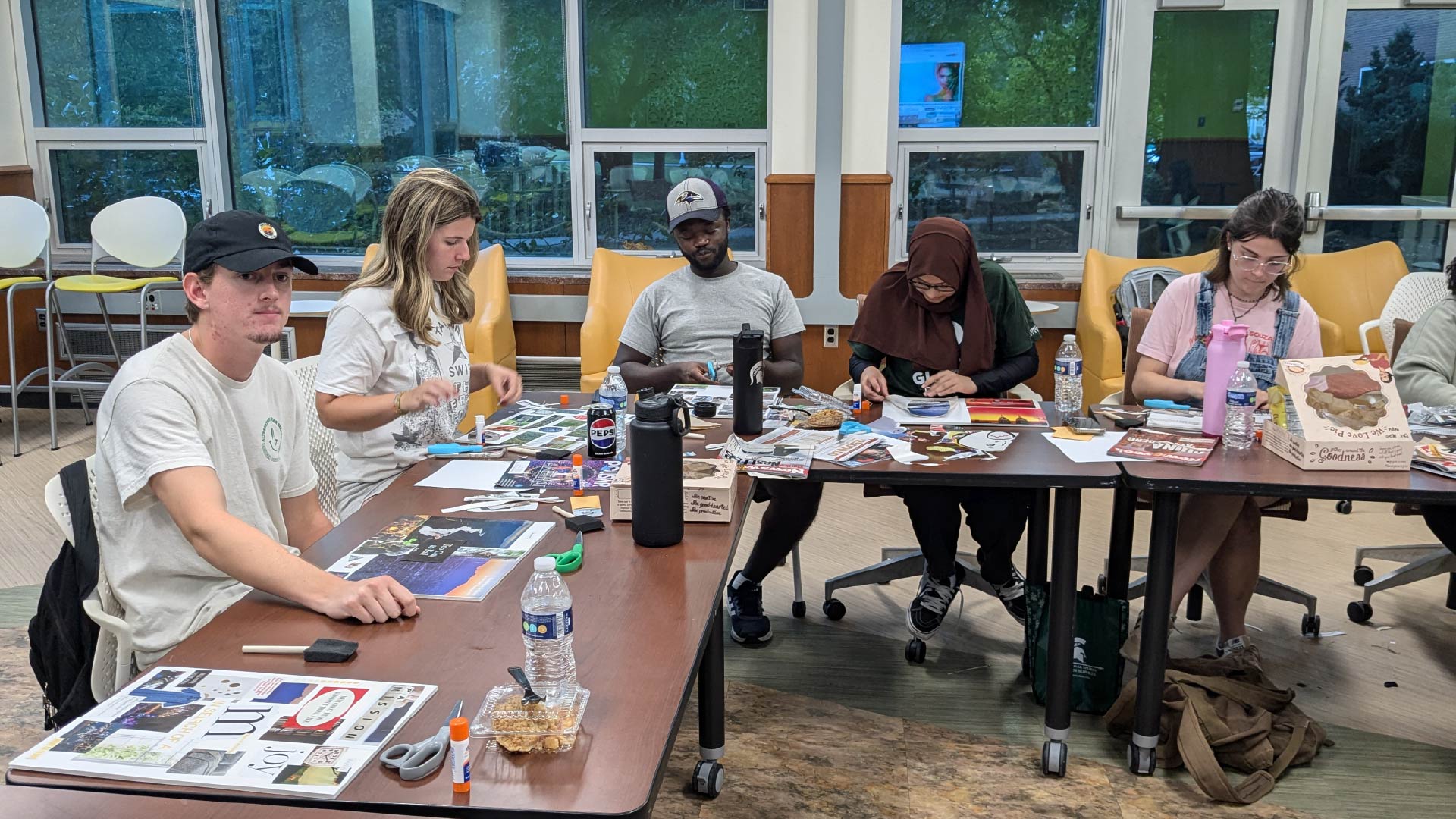
The program’s signature cohort model deepened learning and belonging. One scholar reflected, “The cohort style is an incredible strength of the program. Not only can we learn from our community partners, but we learn from each other every meeting . . . bonding with other scholars made the program memorable.” In addition to their individual placements and cohort meetings, scholars collaborated on a project in partnership with the Allen Neighborhood Center at a neighborhood farmers market to support food access and mental wellness.
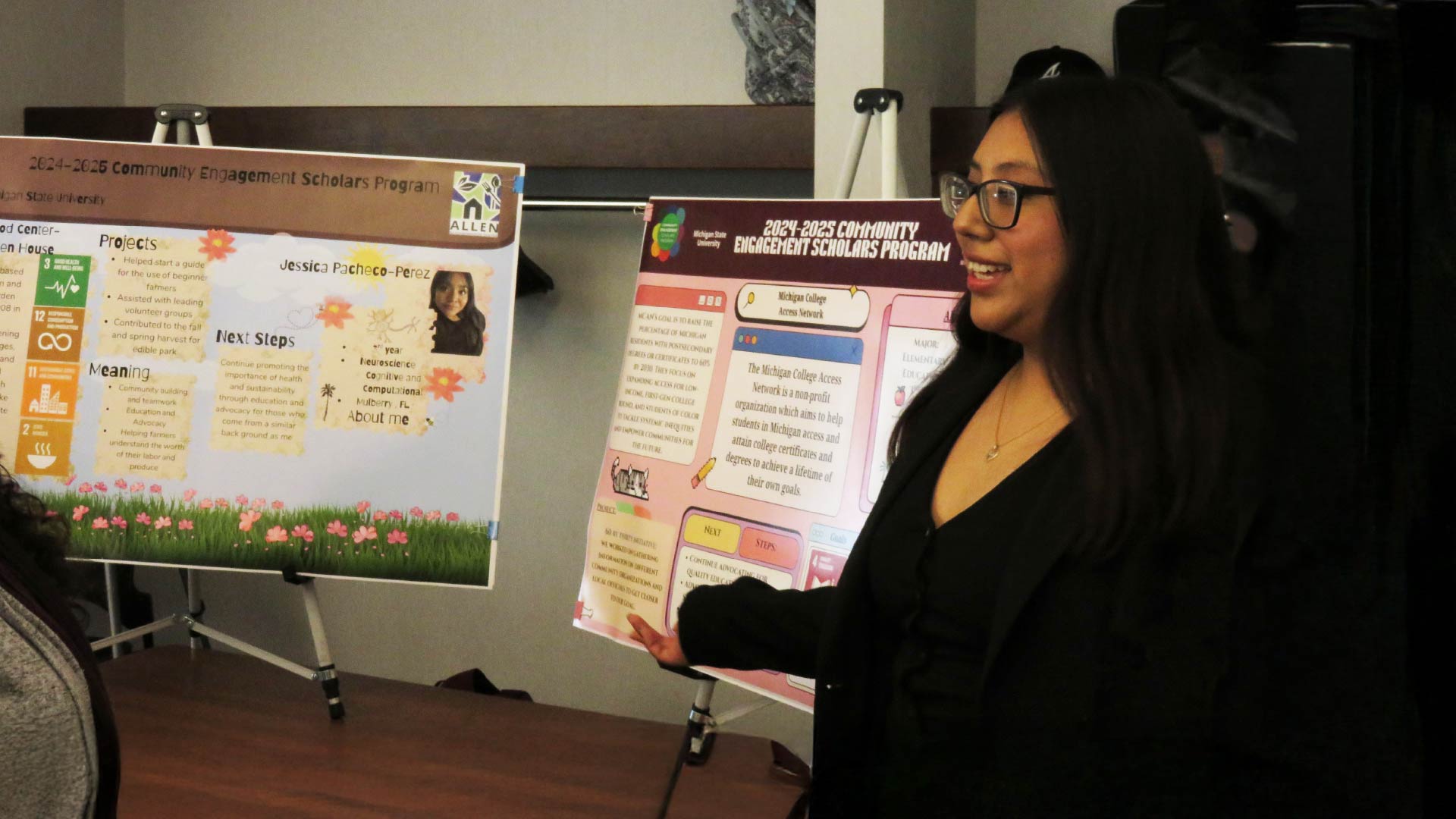
The program culminated with the annual showcase, where scholars participated in a poster session highlighting what they did, what they learned, and how they plan to apply these insights moving forward. The showcase also included remarks from university leaders, recognition of graduating scholars, and expressions of gratitude for community partners and supporters.
“Over the past year, I’ve had the opportunity to support and learn from such a passionate, driven, and resilient group of students,” Morales said at the event. “Being part of this community has reminded me of the power of connection and how much we can accomplish when we uplift one another.”