
May 5, 2026
Student Voices: Sumaiya Imad and Roberto Garcia at the Tenant Resource Center of Mid-Michigan


May 5, 2026
Student Voices: Sumaiya Imad and Roberto Garcia at the Tenant Resource Center of Mid-Michigan
At the Tenant Resource Center of Mid-Michigan (TRC), community-engaged Spartans Sumaiya Imad and Roberto Garcia promote housing access and justice in Lansing. Through their long-term partnerships as interns at the TRC, these students have gained insight into the reality of housing insecurity and perspective on their own educations.
“My partnership with the TRC has helped me realize my passion for advocacy and philanthropy,” says Garcia, a current Community Engagement Scholar and third-year student majoring in English and sociology. “Focusing on housing justice, I came to realize that housing allowed me to pursue my passion for social justice and provide an essential piece in anyone’s life: a place to sleep at night.”
A 2025 report by Public Policy Associates and CityWise revealed that over half of renters in Lansing are cost-burdened, spending over thirty percent of their income on rent. The TRC is dedicated to keeping Lansing residents housed and helping those without housing find homes. Through advocacy, education, and direct action, the organization offsets the effects of this cost burden.
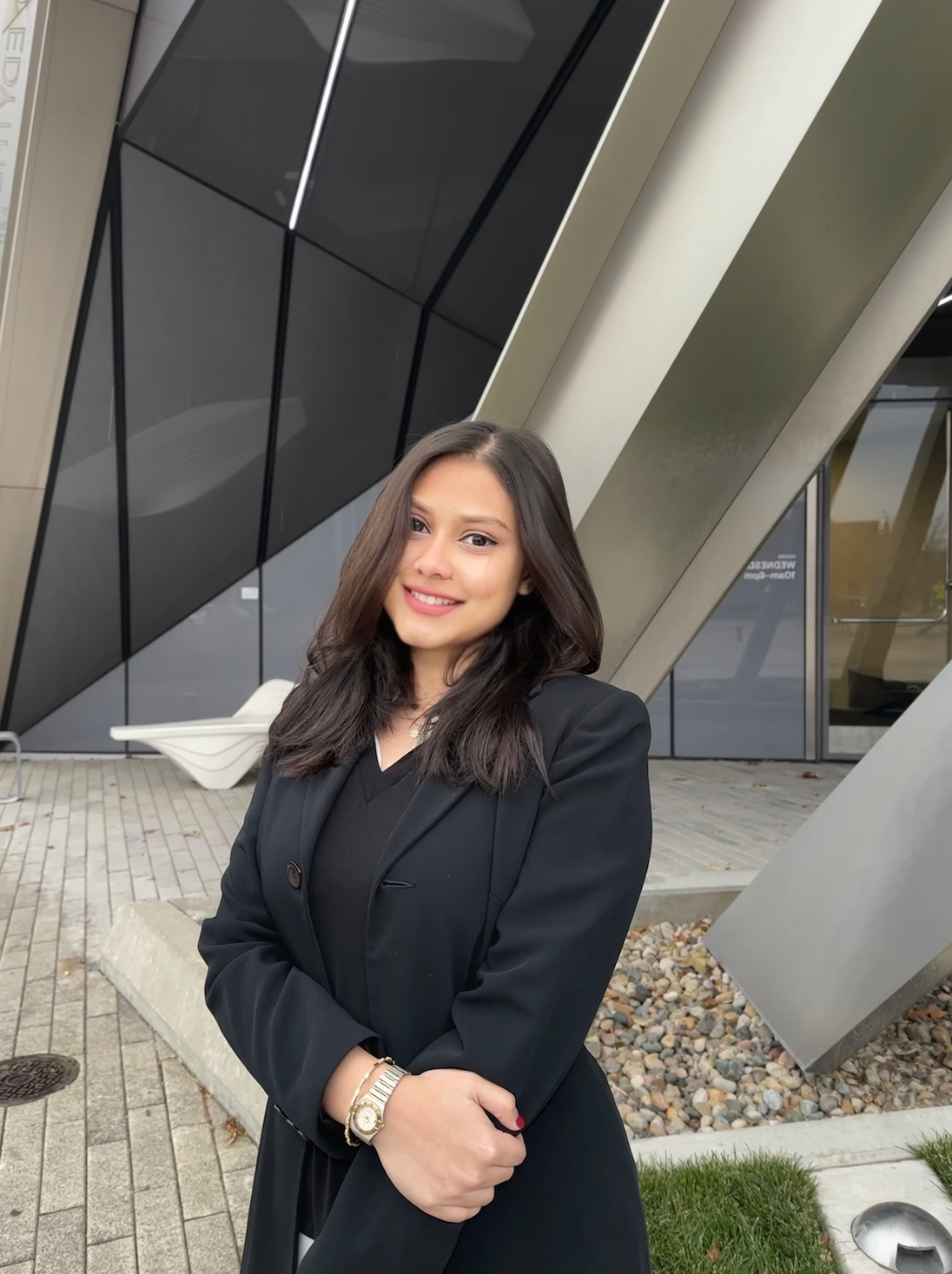 “Engaging with the Tenant Resource Center has been one of the most transformative experiences of my time at MSU,” Imad says. “I have seen how community-based organizations like the TRC can serve as critical points of intervention, providing both immediate support and pathways to stability.”
Imad is a third-year economics student at Michigan State University with minors in sociology and social science quantitative data analytics and a former Community Engagement Scholar. This year, Imad is an intern at the TRC through the Michigan Government Semester Program, through which she develops accessible materials on eviction processes, security deposit rights, and emergency housing resources. Her fellowship as a John Lewis Young Leader with the Robert and Ethel Kennedy Human Rights Center also supports her work addressing housing rights.
For this fellowship, one of Imad’s projects is the creation of an AI-powered housing rights chatbot for the TRC. In collaboration with the MSU College of Law Housing Justice Clinic, she iteratively designed this chatbot and integrated retrieval-based legal sources to provide tenants who may not have immediate access to legal counsel with accurate, plain-language legal guidance. This chatbot joins the TRC’s toolkit in sharing knowledge of tenants’ rights.
“My approach to social change has centered on accessibility, empowerment and systems-level thinking,” Imad says about her community-engaged learning experience with TRC. “In many cases, individuals facing housing insecurity are not lacking in resilience – they are lacking access to clear, actionable information.”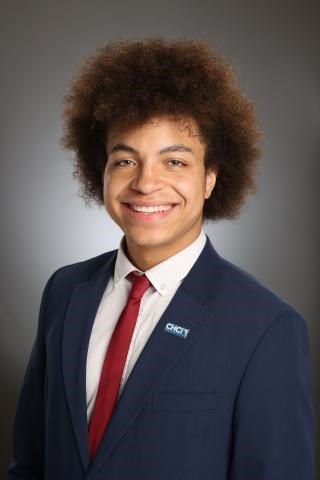
Along with supporting the chatbot project, Garcia created one hundred resource kits containing non-perishable food and essential needs for Lansing’s unhoused population. The supplies for these kits were sourced from a grant he received as a Newman Civic Fellow through Campus Compact and a donation drive he coordinated with this year’s Community Engagement Scholars cohort.
“[My engagement roles] have complemented my education by giving me real-world experience applying what I learn in the classroom and translating it into action,” Garcia says. He first partnered with the TRC as an intern through the Social Science Scholars program in the summer 2025 semester. “I also gained more confidence in myself to make social change and the ability to create a real impact, even in my capacity as an undergraduate student.”
Working together to support their community partner, Garcia and Imad share that they have built valuable connections and learned important lessons about engaged work. “I feel that I’ve created community through my experiences by working with like-minded people,” Garcia says. “Everyone in this line of work believes in the right to exist.”
“Ultimately, I see social change as both immediate and long-term, requiring us to support individuals in the present while working toward systemic conditions that reduce vulnerability in the future,” Imad says. “[This experience] has shaped how I define impact: not solely through academic achievement, but through meaningful, sustained engagement with communities and a commitment to advancing equity in tangible ways.”